Tennis Court Resurfacing Cost: Process, Pricing & Resurfacing vs. Rebuild

Tennis courts age visibly: fading color, hairline cracking, low spots where water pools, and a surface that no longer grips the way it used to. Before assuming a full rebuild is necessary, it's worth understanding what resurfacing actually involves, what drives its cost, and when a rebuild is genuinely the better call.   What Tennis Court Resurfacing Involves   Resurfacing is not just a fresh coat of paint. A proper resurfacing project includes:   Surface assessment — checking for structural cracking, drainage issues, and base integrity before any coating is applied. Crack repair — filling and treating cracks with flexible fillers designed to move with the surface rather than re-crack immediately. Resurfacer application — a textured coat that fills minor surface irregularities and creates a uniform base for color coats. Color coating — typically two coats of acrylic color, applied evenly across the full court. Line striping — precise regulation lines repainted in durable, UV-resistant paint.   Done correctly, resurfacing restores both the appearance and playability of a court that has aged but still has a structurally sound base underneath.   What Drives Resurfacing Cost   Court condition. A court with only cosmetic fading and minor cracking costs less to resurface than one with extensive cracking that requires significant crack repair before coating can even begin.   Court size. Standard singles/doubles courts have a fixed footprint, but multi-court facilities scale cost accordingly.   Number of coats and system type. Standard acrylic resurfacing costs less than cushioned acrylic systems, which add a rubberized layer for extra shock absorption.   Access and site conditions. Courts with easy equipment access cost less to resurface than those requiring extensive material transport or site prep.   Line striping complexity. Standard tennis lines cost less than multi-sport overlays combining tennis with pickleball or other sport lines on the same court.   Resurfacing vs. Rebuild: How to Decide   Resurfacing makes sense when: The base (concrete or asphalt) is structurally sound with no major settling or heaving. Cracking is limited to surface-level or minor structural cracks that can be properly treated. Drainage and slope are still functioning correctly, water isn't pooling on the court.   A rebuild is the better call when: The base shows significant heaving, settling, or structural failure that resurfacing can't fix. Drainage problems are severe enough that water regularly pools, indicating the underlying slope is wrong. Extensive, widespread cracking suggests the base itself has failed rather than just the surface coating.   Resurfacing costs meaningfully less than a full rebuild, but only delivers lasting results when the base underneath is actually sound. A resurfacing job over a failing base is a short-term fix that will need to be redone within a couple of years.   Why Professional Assessment Matters   The biggest cost mistake we see is property owners resurfacing a court that actually needed a rebuild, spending money on a coating system that fails again within a season or two because the underlying problem was never addressed. Our team assesses the base and drainage first, then recommends resurfacing or rebuild honestly, even when resurfacing would be the easier sale.   FAQ   How much does it typically cost to resurface a tennis court? Cost depends on court condition, size, and the surface system chosen. We provide a detailed, itemized quote after assessing your court in person.   How often should a tennis court be resurfaced? Most tennis courts benefit from resurfacing every four to eight years, depending on usage intensity and sun exposure.   Can cracks be fixed without a full rebuild? Yes, in many cases. Surface-level and minor structural cracks can be treated with flexible crack fillers as part of a resurfacing project, provided the underlying base is still sound.   How do I know if I need resurfacing or a full rebuild? The deciding factor is base condition. If the concrete or asphalt base is structurally sound with functioning drainage, resurfacing is usually sufficient. Significant heaving, settling, or drainage failure points to a rebuild.   How long does a tennis court resurfacing project take? Most resurfacing projects take about one to two weeks, including crack repair, coating, curing time, and striping.   Does resurfacing include new line striping? Yes, standard resurfacing packages include fresh, precise line striping as part of the process.   This page is part of our tennis services alongside our tennis court construction company page. Ready to assess your court? Get a quote from Legendary Sport Construction today.

Tennis Court Resurfacing Cost: Process, Pricing & Resurfacing vs. Rebuild

Tennis courts age visibly: fading color, hairline cracking, low spots where water pools, and a surface that no longer grips the way it used to. Before assuming a full rebuild is necessary, it’s worth understanding what resurfacing actually involves, what drives its cost, and when a rebuild is genuinely the better call.
 

What Tennis Court Resurfacing Involves

 
Resurfacing is not just a fresh coat of paint. A proper resurfacing project includes:
 
  1. Surface assessment — checking for structural cracking, drainage issues, and base integrity before any coating is applied.
  2. Crack repair — filling and treating cracks with flexible fillers designed to move with the surface rather than re-crack immediately.
  3. Resurfacer application — a textured coat that fills minor surface irregularities and creates a uniform base for color coats.
  4. Color coating — typically two coats of acrylic color, applied evenly across the full court.
  5. Line striping — precise regulation lines repainted in durable, UV-resistant paint.
 
Done correctly, resurfacing restores both the appearance and playability of a court that has aged but still has a structurally sound base underneath.
 

What Drives Resurfacing Cost

 
Court condition. A court with only cosmetic fading and minor cracking costs less to resurface than one with extensive cracking that requires significant crack repair before coating can even begin.
 
Court size. Standard singles/doubles courts have a fixed footprint, but multi-court facilities scale cost accordingly.
 
Number of coats and system type. Standard acrylic resurfacing costs less than cushioned acrylic systems, which add a rubberized layer for extra shock absorption.
 
Access and site conditions. Courts with easy equipment access cost less to resurface than those requiring extensive material transport or site prep.
 
Line striping complexity. Standard tennis lines cost less than multi-sport overlays combining tennis with pickleball or other sport lines on the same court.
 

Resurfacing vs. Rebuild: How to Decide

 
Resurfacing makes sense when:
  • The base (concrete or asphalt) is structurally sound with no major settling or heaving.
  • Cracking is limited to surface-level or minor structural cracks that can be properly treated.
  • Drainage and slope are still functioning correctly, water isn’t pooling on the court.
 
A rebuild is the better call when:
  • The base shows significant heaving, settling, or structural failure that resurfacing can’t fix.
  • Drainage problems are severe enough that water regularly pools, indicating the underlying slope is wrong.
  • Extensive, widespread cracking suggests the base itself has failed rather than just the surface coating.
 
Resurfacing costs meaningfully less than a full rebuild, but only delivers lasting results when the base underneath is actually sound. A resurfacing job over a failing base is a short-term fix that will need to be redone within a couple of years.
 

Why Professional Assessment Matters

 
The biggest cost mistake we see is property owners resurfacing a court that actually needed a rebuild, spending money on a coating system that fails again within a season or two because the underlying problem was never addressed. Our team assesses the base and drainage first, then recommends resurfacing or rebuild honestly, even when resurfacing would be the easier sale.
 

FAQ

 
How much does it typically cost to resurface a tennis court?
Cost depends on court condition, size, and the surface system chosen. We provide a detailed, itemized quote after assessing your court in person.
 
How often should a tennis court be resurfaced?
Most tennis courts benefit from resurfacing every four to eight years, depending on usage intensity and sun exposure.
 
Can cracks be fixed without a full rebuild?
Yes, in many cases. Surface-level and minor structural cracks can be treated with flexible crack fillers as part of a resurfacing project, provided the underlying base is still sound.
 
How do I know if I need resurfacing or a full rebuild?
The deciding factor is base condition. If the concrete or asphalt base is structurally sound with functioning drainage, resurfacing is usually sufficient. Significant heaving, settling, or drainage failure points to a rebuild.
 
How long does a tennis court resurfacing project take?
Most resurfacing projects take about one to two weeks, including crack repair, coating, curing time, and striping.
 
Does resurfacing include new line striping?
Yes, standard resurfacing packages include fresh, precise line striping as part of the process.
 
This page is part of our tennis services alongside our tennis court construction company page. Ready to assess your court? Get a quote from Legendary Sport Construction today.

Basketball, Pickleball & Tennis Court Dimensions Guide

Basketball, Pickleball & Tennis

Basketball, Pickleball & Tennis Court Dimensions Guide

Getting court dimensions right is the foundation of a court that plays correctly and looks professional. Whether you’re planning a backyard build or a commercial installation, this guide covers the regulation dimensions for basketball, pickleball, and tennis courts, plus the extra space you actually need around each one.
 

Basketball Court Dimensions

 
A regulation full basketball court measures 94 feet by 50 feet (NBA/college) or 84 feet by 50 feet (high school). For backyard installations, a half-court, roughly 47 feet by 50 feet, is far more common and gives most households and neighborhoods plenty of room for real games.
 
Key measurements within the court:
 
  • Free-throw line: 15 feet from the backboard.
  • Three-point line: varies by level, from about 19.75 feet (high school) to 23.75 feet (NBA) at the top of the arc.
  • Hoop height: 10 feet, regulation for all standard adult play.
 
Beyond the painted lines, plan for at least 5-10 feet of clear run-off space around the perimeter so players aren’t at risk running out of bounds into a fence or landscaping.
 

Pickleball Court Dimensions

 
A regulation pickleball court measures 20 feet by 44 feet for the playing surface, the same size for both singles and doubles play. Key measurements:
 
  • Net height: 34 inches at the center, 36 inches at the posts.
  • Non-volley zone (“the kitchen”): extends 7 feet from the net on both sides.
 
Run-off space matters more for pickleball than most sports because of the sport’s fast lateral movement. Plan for a minimum of 10 feet behind each baseline and 5 feet along each sideline where space allows, meaning a comfortable pickleball court footprint is closer to 30 feet by 60 feet including clearance.
 

Tennis Court Dimensions

 
A regulation tennis court measures 78 feet by 27 feet for singles play, or 78 feet by 36 feet for doubles. Net height is 3 feet at the center, rising to 3.5 feet at the posts.
 
Additional clearance space is needed around the court, typically at least 12 feet behind each baseline and 6 feet along each sideline for proper play, bringing the total footprint closer to 120 feet by 60 feet for a fully clear regulation court.
 

Comparing the Three at a Glance

 
Sport


Playing Surface


Net/Rim Height


Recommended Total Footprint


Basketball (half-court)


~47 x 50 ft


10 ft rim


~55 x 60 ft with clearance


Pickleball


20 x 44 ft


34-36 in net


~30 x 60 ft with clearance


Tennis (singles)


78 x 27 ft


3-3.5 ft net


~90 x 40+ ft with clearance


Why Getting Dimensions Right Matters

 
Undersized courts don’t just look off, they change how the sport actually plays. A pickleball court without adequate kitchen clearance or a basketball court without enough run-off space creates real safety and playability issues. We lay out every court to regulation spec (or a clearly communicated, intentional modification for tight lots) so the finished product plays the way it’s supposed to.
 

FAQ

 
What is the standard size of a backyard basketball half-court?
Most backyard half-courts run around 47 feet by 50 feet, though this can be adjusted to fit available space.
 
How much space do I need for a pickleball court including clearance?
Plan for roughly 30 feet by 60 feet to comfortably fit the 20×44-foot playing surface plus adequate run-off space.
 
What’s the difference between singles and doubles tennis court dimensions?
The playing surface widens from 27 feet (singles) to 36 feet (doubles), while the length stays at 78 feet.
 
Can court dimensions be adjusted for smaller yards?
Yes, especially for basketball and pickleball, smaller practice courts can be built on tighter lots, though we’ll always tell you honestly how it affects play.
 
Do multi-sport courts need to compromise on dimensions?
Sometimes, combining sports on one pad requires thoughtful layout decisions about which sport’s full dimensions take priority. We plan this carefully during design.
 
Where can I get help planning my court size for my specific property?
Our team evaluates your lot during a site visit and helps you choose the right dimensions and layout for your space and goals.
 
This page links to our basketball court construction, pickleball court construction, and tennis court construction pages, along with the service-area page for your city. Ready to plan your court’s dimensions? Get a quote from Legendary Sport Construction today.

How Much Does It Cost to Build a Basketball Court?

How Much Does It Cost to Build a Basketball Court?

How Much Does It Cost to Build a Basketball Court?


If you’re just starting to research building a basketball court, you probably want a straight answer before diving into design details. Here’s the quick, honest breakdown of what actually drives the cost, so you can gauge whether this project fits your budget before going further.


The Short Answer


There isn’t a single number that applies to every basketball court, because cost depends on size, site conditions, and the materials you choose. But the pattern is consistent: size and base work drive most of the cost, while surface choice and accessories fine-tune the total.


What Actually Changes the Price


Half-court vs. full court. A half-court for backyard pickup games uses a fraction of the material a full regulation court requires, and that difference shows up directly in base and surfacing costs.


Your existing site. If you already have a flat, accessible concrete pad or driveway in good condition, you may only need a resurfacing project rather than a full new build, which costs significantly less. A sloped yard, poor drainage, or difficult access adds cost to any project.


Concrete vs. asphalt base. Concrete costs more to install but tends to last longer with less frequent resurfacing. Asphalt costs less upfront and still performs well when built correctly, though it typically needs attention sooner.


Surface coating. Standard acrylic coating is the most budget-friendly way to get a real, professional-feeling court. Cushioned acrylic adds cost but adds comfort, especially for daily use.


Hoop system. A fixed-height, in-ground hoop costs less than an adjustable system, and adding a breakaway rim (recommended for any real gameplay) adds a modest amount more.


Extras. Lighting, fencing, and windscreens are add-ons priced separately from the core court build, and they’re worth considering even if you don’t include them on day one, since they can often be added later.


A Realistic Way to Think About Budget


Rather than anchoring on a single number pulled from a national average that may not reflect your actual site, the more useful exercise is this: decide on court size first (half-court is usually plenty for most families), assess whether you have a usable existing pad, and then get a real quote based on your property. That’s the only way to get numbers that actually apply to your project instead of a rough estimate that could be off by a wide margin in either direction.


The One Thing Worth Spending On


If you’re tempted to cut costs somewhere, don’t cut the base. A cheaper, poorly compacted base is the single most common reason backyard courts crack and need expensive rework within just a few years. Spending appropriately on excavation and base prep protects the rest of your investment.


FAQ


Is a half-court cheaper than a full basketball court?
Yes, significantly. A half-court uses less base material, surfacing, and striping, making it the more budget-friendly option for most backyard projects.


Can I save money by resurfacing an existing driveway instead of building new?
Often yes, if your existing pad is structurally sound and properly sloped, resurfacing costs considerably less than a brand-new build.


What’s the cheapest way to get a real, playable basketball court?
A half-court with a standard acrylic coating system and a fixed-height hoop is typically the most budget-friendly way to get a genuinely good playing surface.


Should I skip the breakaway rim to save money?
We don’t recommend it if the court will see real gameplay. Breakaway rims protect the rim and backboard from damage that a rigid rim can’t absorb, and the added cost is modest relative to the protection it provides.


How do I get a real price instead of a rough estimate?
The only reliable way is a site visit and itemized quote, since your specific site conditions significantly affect final pricing.


Is it worth adding lighting now or can I add it later?
Lighting can often be added after the initial build, so it’s reasonable to start with the core court and add lighting later if budget is tight now.


For the full cost breakdown across every sport and project type, see our comprehensive cost to build a sport court pillar guide, or our basketball-specific cost breakdown. Ready for a real number? Get a quote from Legendary Sport Construction today.
Pickleball Court Builder in Las Vegas

Pickleball Court Builder in Las Vegas

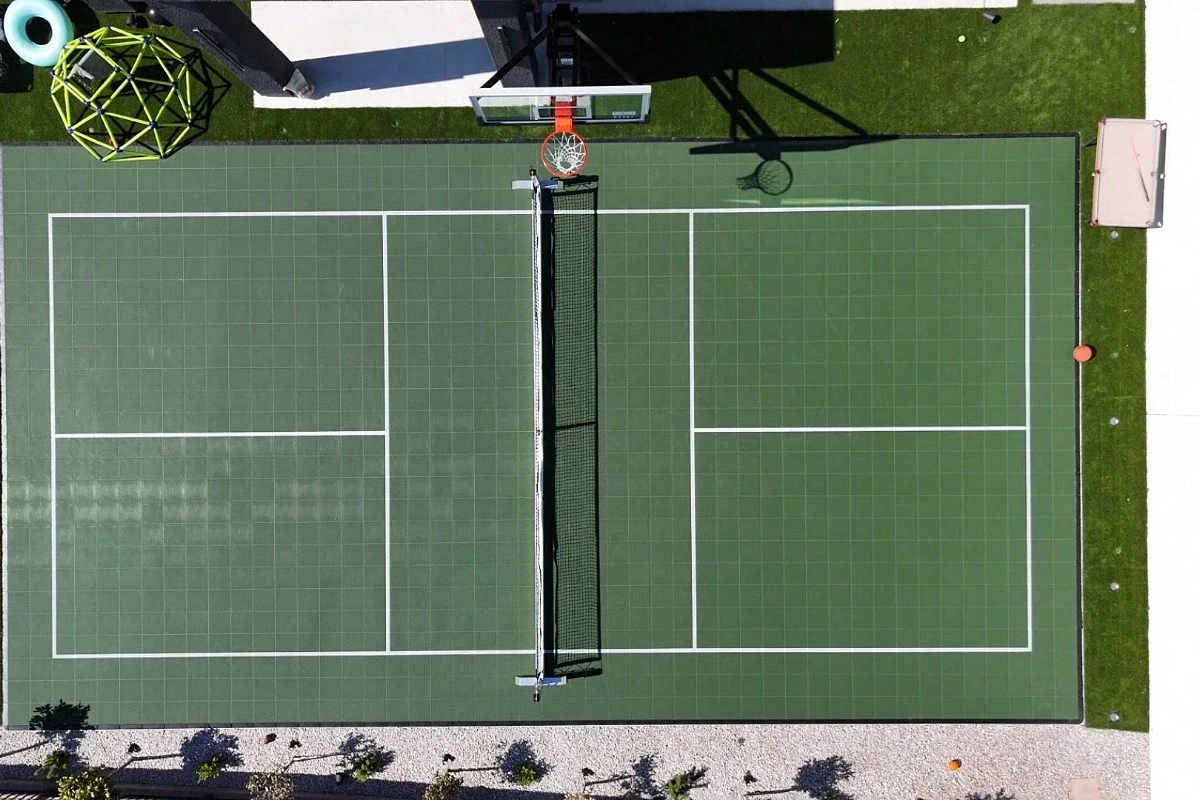
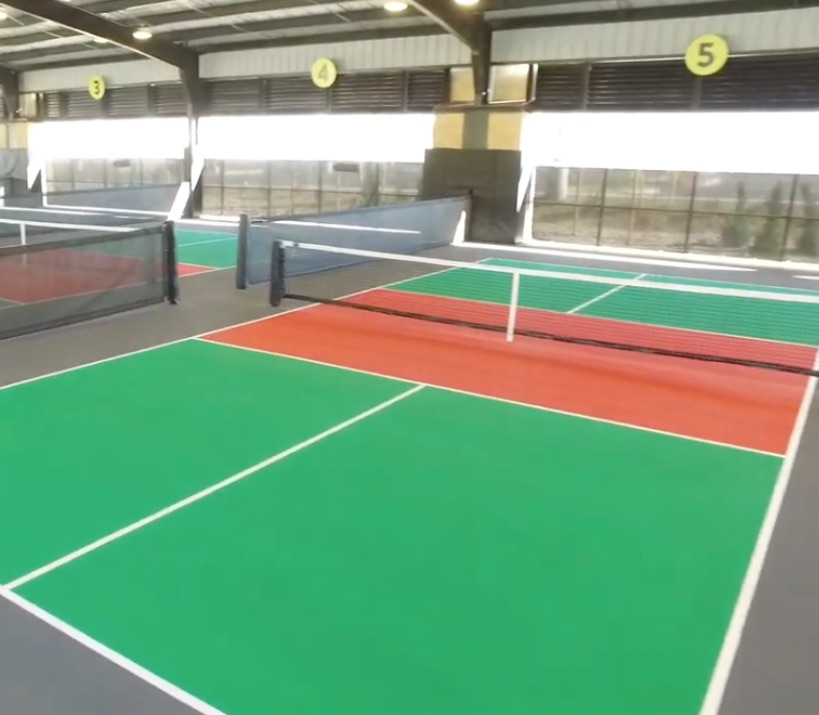
Legendary Sport Construction is the pickleball court builder Las Vegas homeowners, HOAs, and commercial property owners trust for courts that are built to regulation spec and engineered for our desert climate. From backyard courts to multi-court community amenities, we handle design, base construction, surfacing, striping, net systems, and lighting as one complete build.

Why Las Vegas Chooses Legendary Sport Construction for Pickleball

Pickleball’s rapid growth has brought a wave of contractors into the space who don’t have real court-building experience behind them. We do. Our team applies the same base-first, climate-specific approach to pickleball courts that we use across basketball, tennis, and volleyball construction:

  • Post-tension or properly reinforced concrete bases built to resist the cracking that Las Vegas soil movement and heat cycling can cause over time.
  • UV-stable acrylic surfacing engineered for sustained high-heat exposure, so your court doesn’t chalk or fade after one summer.
  • Precise regulation striping, including kitchen (non-volley zone) lines, positioned to spec every time.
  • HOA and community experience, since many Las Vegas Valley pickleball installations happen inside master-planned communities with design review requirements.

Our Pickleball Court Services in Las Vegas

New court construction for backyards, HOA common areas, churches, and commercial recreation facilities.

Multi-court and multi-sport builds, including pickleball courts striped alongside basketball or volleyball on shared pads for properties maximizing limited space.

Court lighting packages, a high-demand add-on given how much Las Vegas pickleball activity shifts to evening hours during summer.

Fencing and windscreens for ball containment and wind mitigation on exposed sites.

Resurfacing and recoating for existing pickleball courts showing surface wear, fading, or cracking.

The Build Process

  1. Site visit and design — we assess your space and design a layout that fits regulation dimensions plus adequate run-off room.
  2. Base construction — excavation, compaction, and a reinforced concrete or asphalt pad poured to proper slope.
  3. Acrylic surfacing — multi-coat color system applied for consistent bounce and long-term UV stability.
  4. Striping and net installation — precise court lines and a properly anchored net system.
  5. Lighting and extras — LED lighting, fencing, and any additional amenities installed and tested.

Built for Las Vegas Play

Las Vegas pickleball players deal with two challenges most of the country doesn’t: extreme summer heat and intense year-round sun. Our surface systems are chosen specifically to withstand both, and our lighting packages are designed to make evening play genuinely comfortable rather than an afterthought. That combination is why our pickleball courts hold up and get used, not just look good on install day.

FAQ

How much does it cost to build a pickleball court in Las Vegas?

Costs depend on court size, base type, surface system, and any lighting or fencing add-ons. We provide a detailed, itemized quote after a site visit.

Can you build a pickleball court on my existing driveway or patio?

Sometimes, if the existing surface is structurally sound and correctly sloped. We evaluate this during your site visit.

Do you handle HOA approval requirements for pickleball courts in Las Vegas communities?

We have experience navigating HOA design review processes common across Las Vegas Valley communities and can help you prepare what’s typically required.

How long does it take to build a pickleball court?

Most standalone pickleball court projects take one to two weeks from base construction through final striping.

Is court lighting a good investment for a Las Vegas pickleball court?

Yes. LED lighting extends usable hours significantly, which matters given how much local pickleball play shifts to evenings during hot months.

Do you build multi-sport courts that include pickleball lines?

Yes, we regularly stripe pickleball lines alongside basketball or volleyball courts on the same pad for properties with limited space.

This page links to our Pickleball Court Construction guide and our Phoenix pickleball page. Ready to build your pickleball court in Las Vegas? Get a quote from Legendary Sport Construction today.
Pickleball Court Construction in Phoenix, AZ

Pickleball Court Construction in Phoenix, AZ

Pickleball Court Construction in Phoenix, AZ

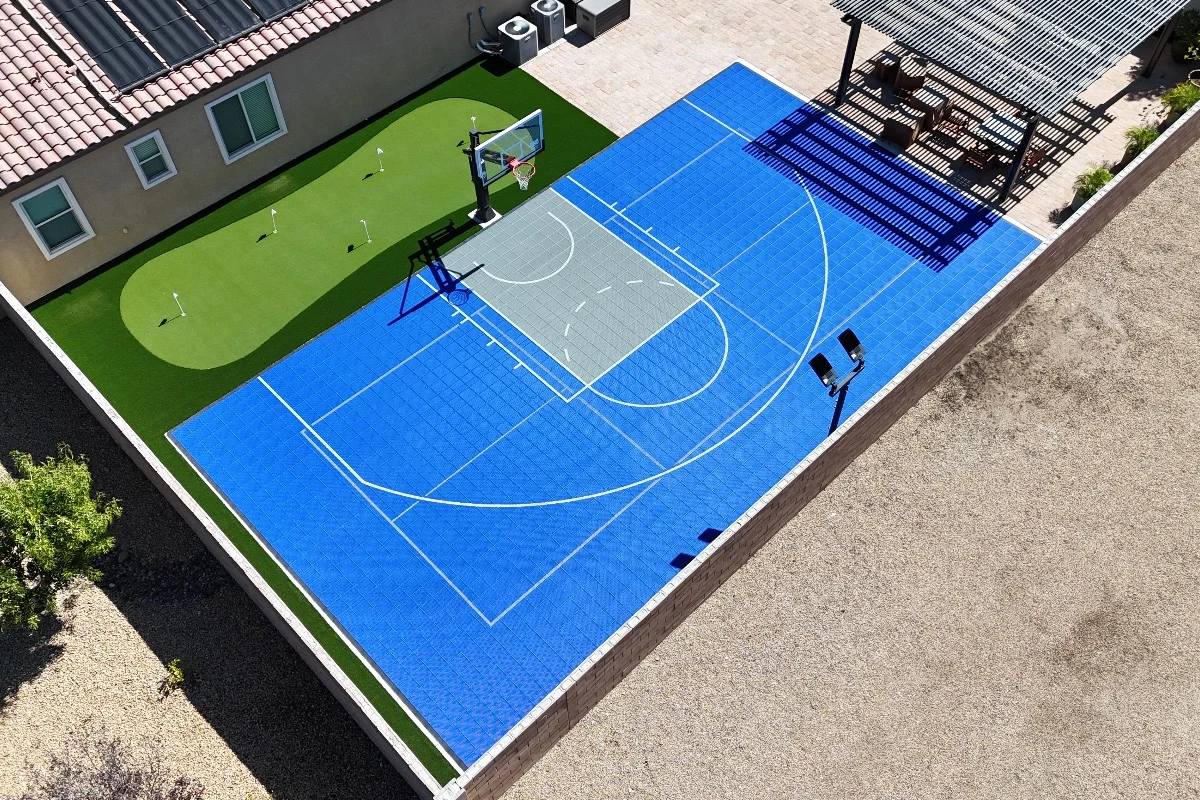
Legendary Sport Construction is bringing our pickleball court construction expertise to Phoenix, Arizona. As pickleball demand grows across the Valley, homeowners, HOAs, and commercial property owners need a builder who understands both the sport’s exact specifications and what it takes to make a court survive Phoenix’s extreme heat and sun. That’s exactly what we do.


Building Pickleball Courts for the Phoenix Climate


Phoenix presents some of the harshest conditions in the country for an outdoor sports surface. Summer surface temperatures on unshaded pavement regularly exceed 150°F, and UV exposure is relentless nearly year-round. A pickleball court built with generic materials or a rushed base will show cracking, surface breakdown, and color fading far faster here than almost anywhere else.


We address this directly:


  • Reinforced, properly compacted bases designed to resist the expansion and contraction cycles caused by extreme heat swings.
  • UV-stable acrylic surfacing systems formulated to hold color and texture under sustained high-heat exposure.
  • Slope and drainage engineering that accounts for Phoenix’s intense, brief monsoon rain events, which can overwhelm poorly graded surfaces quickly.
  • Lighting packages that make evening play genuinely comfortable, which matters enormously in a market where daytime summer play is often not an option.


What We Build in Phoenix


New pickleball court construction for backyards, HOA amenity spaces, churches, and commercial recreation facilities, built to regulation 20×44-foot dimensions with proper run-off space.


Multi-sport court builds, striping pickleball lines alongside basketball or volleyball on a shared pad, an efficient option for properties balancing multiple activities on limited land.


Court lighting, fencing, and windscreens to make courts comfortable and usable across more of the day and year.


Resurfacing and recoating for existing Phoenix-area pickleball courts already showing wear from sun and heat exposure.


Why a Purpose-Built Court Matters in Phoenix


A pickleball court is unforgiving of an uneven or poorly built surface, low, fast-bouncing shots reveal imperfections that a basketball court might hide. Combined with Phoenix’s climate demands, that means base quality and surface selection matter even more than in milder markets. We treat every Phoenix court build with the same base-first standard we’ve applied for years in Las Vegas, adapted for the specific soil and climate conditions across the Valley.


Our Process


  1. Site visit and design consultation — reviewing your space, sun orientation, and layout goals.
  2. Base construction — excavation, compaction, and a concrete or asphalt pad built to handle Phoenix heat cycling.
  3. Acrylic surfacing and striping — a UV-stable multi-coat system with precise regulation lines.
  4. Net system and accessories — properly anchored net posts, plus any lighting, fencing, or shade additions.


FAQ


Do you build pickleball courts throughout the Phoenix metro?
Yes, we are expanding our service area to cover the Phoenix, AZ metro for new pickleball court construction and resurfacing.


How does Phoenix heat affect pickleball court construction?
Extreme surface temperatures and constant UV exposure require heat-cycle-resistant bases and UV-stable acrylic surfacing. Generic materials break down far faster under these conditions.


What size court do I need for pickleball in my backyard?
Plan for roughly 30×60 feet to comfortably fit the regulation 20×44-foot playing surface plus adequate run-off space.


Is lighting important for a Phoenix pickleball court?
Very much so. Given how much play shifts to evening hours to avoid daytime heat, quality LED lighting is one of the highest-value additions for a Phoenix court.


Can an existing Phoenix court be resurfaced instead of rebuilt?
Often yes, if the base is still structurally sound. We evaluate existing courts and recommend resurfacing when it will restore performance without a full rebuild.


How long does construction take?
Most standalone pickleball court projects take one to two weeks from base construction through final striping, depending on site conditions.


This page links to our Pickleball Court Construction guide and our Las Vegas pickleball builder page. Ready to build your pickleball court in Phoenix? Get a quote from Legendary Sport Construction today.
Basketball Court Construction Company Serving Las Vegas & Phoenix

Basketball Court Construction Company

Basketball Court Construction Company Serving Las Vegas & Phoenix

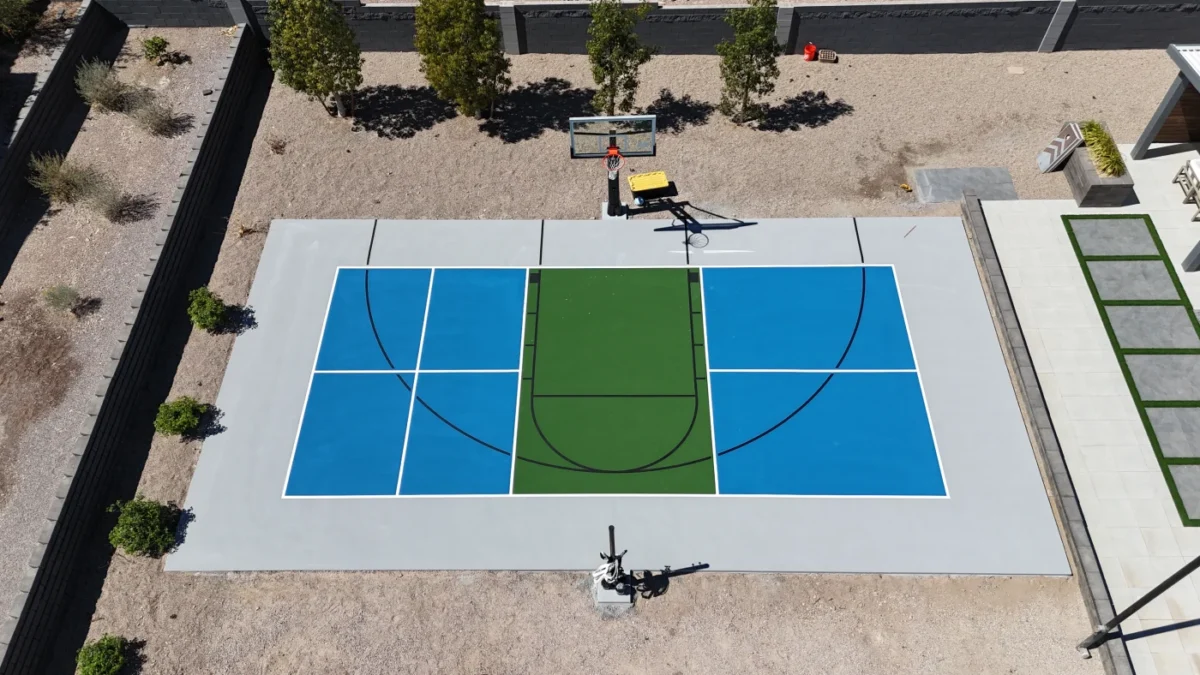
Legendary Sport Construction is a basketball court construction company built around one standard: courts that are engineered correctly from the ground up and finished to play true for decades. We design and build backyard courts, HOA and community courts, school and athletic facility courts, and commercial basketball installations across Las Vegas, Nevada and the Phoenix, Arizona metro.


If you’re comparing basketball court construction companies, the difference that matters most isn’t the color of the paint. It’s what’s under it: the base, the drainage, the surface system, and the crew installing it.


Why Property Owners Choose Legendary Sport Construction


Engineering-first approach. Every project starts with a site evaluation covering soil conditions, drainage, slope, and orientation. In the desert Southwest, courts that aren’t graded and based correctly fail early, regardless of how good the paint job looks on day one.


Full-service builds. We handle excavation, base preparation, concrete or asphalt paving, acrylic surfacing, line striping, hoop systems, fencing, and court lighting as one coordinated project, not a string of subcontractors you have to manage yourself.


Regional experience. Building a basketball court in a high-UV, high-heat climate requires different surface specifications than building one in a milder region. We use coating systems and base designs proven to hold up against Las Vegas and Phoenix conditions specifically.


Transparent scope and pricing. You get a defined scope, a realistic timeline, and a quote that reflects the actual work, not a lowball number that turns into change orders once the project starts.


Our Basketball Court Construction Services


New court construction for backyards, HOAs, churches, schools, and commercial properties, sized and laid out to regulation dimensions or customized to your space.


Court resurfacing and recoating for existing courts showing cracking, fading, or surface breakdown, extending the life of the court without a full rebuild.


Surface system selection, matching acrylic, cushioned acrylic, or modular tile systems to your usage, budget, and site conditions.


Accessories and lighting, including in-ground and portable hoop systems, court fencing, and LED lighting packages for evening play.


Multi-sport conversions, striping courts for basketball alongside pickleball or volleyball lines on the same pad.


Our Process


  1. Consultation and site visit — we assess your space, discuss your goals, and talk through surface and layout options.
  2. Design and proposal — you get a detailed scope, material specifications, and pricing before any work begins.
  3. Base construction — excavation, compaction, and concrete or asphalt installation to the correct slope and thickness.
  4. Surfacing and striping — acrylic color coats or modular tile installation, followed by precise court line painting.
  5. Accessories and final walkthrough — hoops, lighting, and fencing installed and tested, with a final walkthrough before we call the project complete.


Built for the Desert Southwest


Las Vegas and Phoenix present some of the toughest conditions in the country for outdoor sports surfaces: intense UV, surface temperatures that can exceed 140°F, and wide seasonal temperature swings that stress concrete and coatings. Our surface systems and base designs are chosen specifically to handle that environment, which is why courts we build hold their color and structural integrity for years longer than generic installations.


FAQ


What does a basketball court construction company actually do?
A full-service company like Legendary Sport Construction handles the entire build: site evaluation, excavation, base construction, surfacing, striping, hoop and lighting installation, and any fencing or accessories, coordinated as a single project.


How much does it cost to build a basketball court?
Costs vary based on size, surface system, site conditions, and accessories. Our team provides a detailed, itemized quote after a site visit so you know exactly what you’re paying for. See our full basketball court construction cost breakdown for typical ranges.


Do you build both residential and commercial basketball courts?
Yes. We build backyard courts, HOA and community courts, church and school courts, and commercial or municipal installations.


Can you convert an existing concrete pad or driveway into a basketball court?
In many cases, yes, provided the existing slab is structurally sound and properly sloped. We evaluate the pad during our site visit.


Do you serve areas outside Las Vegas and Phoenix?
We primarily serve the Las Vegas metro and are expanding service into the Phoenix, AZ metro. Contact us to confirm coverage for your location.


How long will a new basketball court last?
With proper installation and periodic recoating, a well-built acrylic basketball court typically lasts 15-20+ years before major structural work is needed.


This hub page links to our supporting basketball guides (cost, surface options, hoops and lighting) and to the relevant service-area page for your city. Ready to start your project? Get a quote from Legendary Sport Construction today.
Basketball Court Installation: Outdoor vs Indoor, Acrylic vs Specialty Surfaces

Basketball Court Installation

Basketball Court Installation: Outdoor vs Indoor, Acrylic vs Specialty Surfaces

Building a basketball court is a bigger decision than picking a hoop and pouring concrete. The surface, the base, the drainage plan, and the finish system all determine whether you get a court that plays true for twenty years or one that cracks, fades, and needs rework in five. Legendary Sport Construction has installed basketball courts across Las Vegas and the Phoenix Valley for homeowners, HOAs, schools, and commercial property owners who want a court built once and built right.
 

Outdoor vs Indoor Basketball Court Installation

 
The core engineering question on every project is where the court lives.
 
Outdoor courts have to survive direct sun, temperature swings, and in the Southwest, UV exposure that is more intense than almost anywhere else in the country. That means the base (typically compacted aggregate under a concrete or asphalt pad), the crack-resistant membrane, and the surface coating all need to be rated for exterior use. Drainage and slope also matter more outdoors than indoors: a properly built outdoor court is sloped at a slight, even grade so water sheets off instead of pooling and undermining the surface.
 
Indoor courts (gyms, converted warehouses, home sport rooms) don’t face weather, but they carry different requirements: subfloor moisture control, sound and shock absorption, and often a different surface category altogether, such as modular tile or hardwood-style synthetic systems instead of acrylic coatings. Indoor installs also need to account for HVAC and humidity, since a slab that never gets exposed to sun can still trap moisture that damages a coating from underneath.
 
Both settings need a properly prepared base. This is where most court failures actually start. If the sub-base isn’t compacted correctly or the concrete/asphalt pad isn’t cured and finished to spec, no surface system on top of it will hold up. We treat base prep as the most important step in the build, not a formality before the “real” work begins.
 

Acrylic vs Specialty Surface Systems

 
Once the pad is ready, the surface system is the next major decision.
 
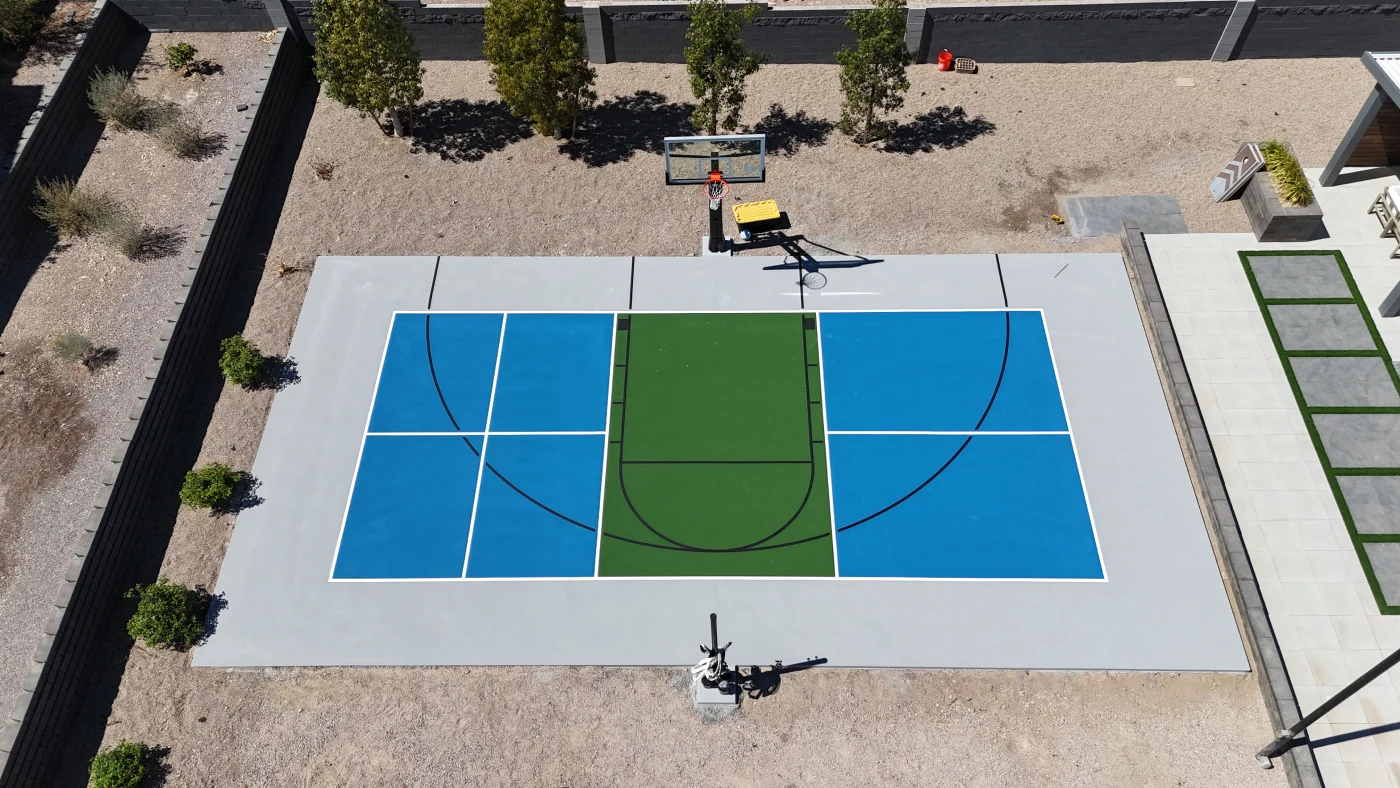
Acrylic surfacing is the standard for most outdoor basketball courts in our region, and for good reason. A multi-coat acrylic system (typically a resurfacer coat to fill minor texture and cracks, followed by color coats and line striping) creates a surface that is UV-stable, textured for consistent ball bounce and traction, and available in essentially any color scheme. Acrylic systems are also the most cost-effective way to get a professional, tournament-grade playing surface, and they are straightforward to recoat every several years rather than replace.
 
Specialty surfaces cover a range of alternatives:
 
  • Modular tile systems (interlocking polypropylene tiles) are popular for driveways, garages, and situations where you want a surface that can be installed over existing concrete without extensive prep, or even removed and relocated later. They offer excellent shock absorption and drainage through their perforated design.
  • Cushioned acrylic systems add a rubberized layer beneath the color coats for extra joint protection, which matters for high-usage courts or players concerned about long-term impact on knees and ankles.
  • Synthetic hardwood-look systems are used mostly indoors where the goal is to replicate the look and feel of a gymnasium floor without the maintenance demands of real hardwood.
 
The right choice depends on usage (backyard pickup games vs. daily training), budget, climate exposure, and whether the court needs to double as a pickleball or multi-sport surface with different striping.
 

What Goes Into a Professional Installation

 
A basketball court installation is not one trade, it’s a sequence:
 
  1. Site evaluation and layout — confirming dimensions, orientation (minimizing glare for players shooting into the sun), and grading.
  2. Excavation and base prep — compacting the sub-base to the density needed to prevent future settling or cracking.
  3. Concrete or asphalt pad installation — poured and finished to the correct slope, with control joints placed to manage natural cracking.
  4. Surface system application — resurfacer, color coats, and cushioning if specified, applied in the correct number of coats and cure times.
  5. Line striping and graphics — court lines, logos, or multi-sport overlays painted to regulation spacing.
  6. Accessories — hoop systems, anchoring, and lighting installed and tested.
 
Skipping or rushing any one of these steps is the most common reason a “new” court needs major repair inside a few years.
 

Why Professional Installation Matters

 
DIY and low-bid court installations tend to fail in predictable ways: inadequate base compaction leads to cracking, incorrect slope leads to standing water and surface delamination, and cheap acrylic coatings chalk and fade within a season or two under desert sun. A properly engineered court, by contrast, is built to handle decades of use with routine maintenance rather than repeated rebuilds.
 
Legendary Sport Construction builds every court, whether it’s a single backyard half-court or a full commercial installation, on the same standard: correct base, correct surface system, correct slope, and a finish that plays true from the first game to the thousandth.
 

FAQ

 
How long does a basketball court installation take?
Most residential courts take one to three weeks from excavation to finished striping, depending on size, base conditions, and surface system. Commercial or multi-court projects take longer.
 
Is acrylic or modular tile better for a backyard court?
Acrylic is generally the better choice when you want a permanent, tournament-quality surface with maximum color and design flexibility. Modular tile is a strong option when you need faster installation, easier future removal, or a surface that can go directly over existing concrete with minimal prep.
 
Can an existing driveway or slab be converted into a basketball court?
Often yes, if the existing concrete is structurally sound and properly sloped. We evaluate the pad first, since a resurfacing system only performs as well as what’s underneath it.
 
How often does an acrylic court need to be recoated?
Typically every four to seven years for heavily used courts, depending on sun exposure and traffic. Recoating is far less expensive than a full rebuild.
 
Do outdoor basketball courts in Las Vegas or Phoenix need special UV-resistant coatings?
Yes. Standard interior paints and generic coatings break down quickly under intense desert UV. We use acrylic systems specifically formulated for sustained sun exposure and high surface temperatures.
 
This page links to the Basketball Court Construction hub and the relevant service-area page for your city. Ready to plan your court? Get a quote from Legendary Sport Construction today.
 

Sport Court Resurfacing & Maintenance

Sport Court Resurfacing & Maintenance

Sport Court Resurfacing & Maintenance

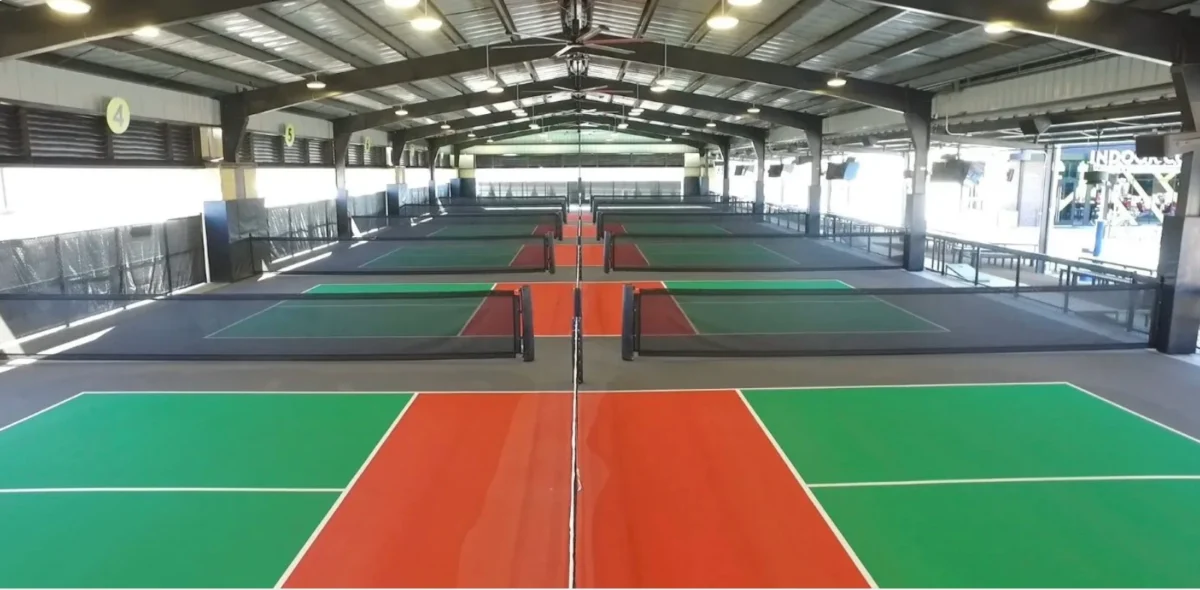
A well-built sport court is a long-term asset, but only if it’s maintained correctly along the way. Legendary Sport Construction provides resurfacing and maintenance services for basketball, pickleball, tennis, and volleyball courts across Las Vegas and Phoenix, helping property owners protect their investment and avoid premature, costly rebuilds.
 

Signs Your Court Needs Resurfacing

 
  • Fading or chalking color, a sign the acrylic coating’s UV protection is breaking down.
  • Hairline or spreading cracks, which allow water intrusion that can damage the base beneath the surface.
  • Inconsistent bounce or traction, indicating uneven wear across the playing surface.
  • Standing water after rain, which points to a drainage or slope issue that needs to be addressed before resurfacing.
  • Faded or hard-to-see line striping, which affects both play accuracy and the court’s overall appearance.
 

What Our Resurfacing Service Includes

 
  1. Full surface assessment, checking base integrity, drainage, and the extent of cracking before recommending a scope of work.
  2. Crack repair, using flexible fillers designed to move with the base rather than re-crack quickly.
  3. Resurfacer coat application, restoring a uniform surface texture across the full court.
  4. Fresh color coats, applied in your existing colors or a new palette if you’re ready for a refresh.
  5. New line striping, painted to precise regulation spacing in durable, UV-resistant paint.
 

Ongoing Maintenance Recommendations

 
Routine cleaning. Regularly sweeping debris and periodically rinsing the surface prevents dirt and organic material from degrading the coating and creating slip hazards.
 
Prompt crack attention. Small cracks should be treated quickly, before they widen and allow water to undermine the base beneath the coating.
 
Drainage checks. Periodically confirming that water sheets off the court properly after rain helps catch developing slope or drainage issues before they cause real damage.
 
Scheduled recoating. Most acrylic courts benefit from a full recoat every four to seven years, depending on usage intensity and sun exposure. Recoating on a proactive schedule, rather than waiting until damage is severe, keeps costs lower and the court playable throughout.
 
Net, hoop, and fencing checks. Hardware should be periodically inspected for loosening, rust, or wear, since a failing net post or unstable hoop anchor is a safety issue, not just a cosmetic one.
 

Resurfacing vs. Full Rebuild

 
Resurfacing only makes sense when the underlying base is structurally sound. If your court shows significant heaving, widespread structural cracking, or persistent drainage failure that basic slope correction can’t fix, a full rebuild is the more responsible long-term investment, even though it costs more upfront than resurfacing.
 

Why Regular Maintenance Pays Off

 
Courts that receive periodic maintenance and recoating on a proactive schedule consistently outlast courts that are left alone until problems become severe. Addressing small issues early, a crack here, a drainage tweak there, is dramatically less expensive than waiting for those issues to compound into base failure that requires a full rebuild.
 

FAQ

 
How often should a sport court be resurfaced?
Most acrylic courts benefit from a full recoat every four to seven years, depending on usage intensity and sun exposure.
 
What are the first signs that a court needs resurfacing?
Fading or chalking color, spreading cracks, inconsistent bounce, and faded line striping are the most common early signs.
 
Can cracks be repaired without a full resurfacing project?
Minor cracks can sometimes be treated individually, but if cracking is widespread, a full resurfacing project (which includes comprehensive crack repair) delivers better long-term results.
 
How do I know if my court needs resurfacing or a full rebuild?
The deciding factor is base condition. If the concrete or asphalt base is structurally sound with functioning drainage, resurfacing is usually sufficient.
 
Does resurfacing include new line striping?
Yes, our resurfacing service includes fresh, precise line striping as part of the standard scope.
 
What routine maintenance should I be doing between resurfacing projects?
Regular cleaning, prompt attention to small cracks, periodic drainage checks, and inspecting hardware like nets, hoops, and fencing for wear.
 
This page connects to our acrylic sports court surface guide and our tennis court resurfacing cost page. Ready to schedule an assessment? Get a quote from Legendary Sport Construction today.
 

Pickleball Court Construction: Design, Surfaces, Dimensions & Lighting

Pickleball Court Construction

Pickleball Court Construction: Design, Surfaces, Dimensions & Lighting

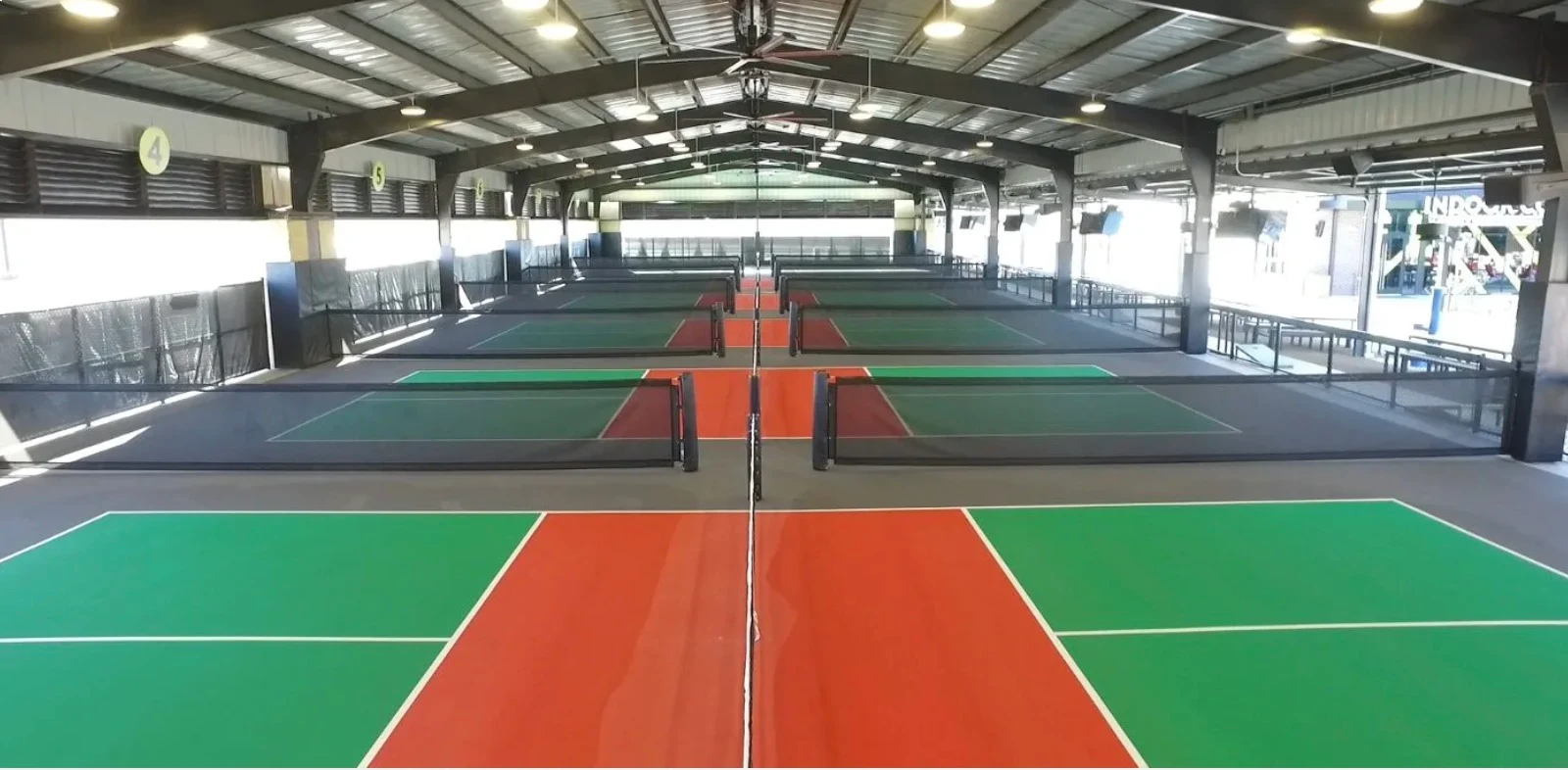
Pickleball is the fastest-growing sport in the country, and demand for properly built courts, backyard, HOA, and commercial, has grown right alongside it. Legendary Sport Construction designs and builds pickleball courts from the ground up: correct dimensions, the right surface system, and lighting that extends play into the evening. Here’s what goes into a court built to last.
 

Pickleball Court Design and Layout

 
A regulation pickleball court measures 20 feet by 44 feet for the playing surface, but a functional court needs more than that footprint. Adequate run-off space around the perimeter (ideally 10 feet behind the baselines and 5 feet along the sidelines where space allows) keeps play safe and comfortable. Net height is set at 34 inches at the center and 36 inches at the posts.
 
For properties with tighter lots, we help clients decide between a dedicated regulation court and a smaller practice court, or a multi-use court that can be striped for pickleball alongside another sport like basketball or volleyball on the same pad.
 
Orientation matters. Courts should be oriented so the sun isn’t directly in players’ eyes during peak play times, typically a north-south orientation minimizes glare issues for most schedules.
 

Surface Options for Pickleball Courts

 
Acrylic surfacing is the standard choice for outdoor pickleball courts. A multi-coat acrylic system over a properly built concrete or asphalt base gives consistent ball bounce, good traction, and long-term UV stability, critical for courts that see full sun exposure in Las Vegas and Phoenix.
 
Cushioned acrylic systems add an extra layer of shock absorption, which many pickleball players value given the sport’s quick lateral movement and stop-start play style.
 
Post-tension concrete is increasingly used as a base option for pickleball courts because it resists cracking better than standard slab concrete, an important consideration since pickleball courts are unforgiving of surface irregularities that affect low, fast-bouncing shots.
 

Lighting for Pickleball Courts

 
Because pickleball is popular with players looking to avoid peak daytime heat, court lighting is one of the highest-value additions for a Las Vegas or Phoenix pickleball court. LED sports lighting systems, properly placed to avoid glare and shadow across the net area, let a court get used comfortably well after sunset, effectively doubling the practical hours of use during the hottest months.
 

Fencing and Amenities

 
Pickleball courts benefit from perimeter fencing both for ball containment and safety, especially at multi-court facilities or courts near shared community space. Windscreens can reduce wind interference on exposed sites, and shaded seating areas or pergolas are a popular add-on for courts that host groups or leagues.
 

What Goes Into the Build

 
  1. Design consultation — confirming dimensions, orientation, and any multi-sport striping needs.
  2. Base construction — excavation, compaction, and a concrete or asphalt pad poured to the correct slope.
  3. Surfacing — acrylic color coat system applied and cured.
  4. Striping — precise regulation lines, kitchen (non-volley zone) lines, and any additional sport overlays.
  5. Net posts and hardware — properly anchored net system installed to regulation height.
  6. Lighting, fencing, and amenities — added based on your usage and budget.
 

FAQ

 
What are the official dimensions of a pickleball court?
The playing surface is 20 feet by 44 feet, with recommended run-off space of at least 10 feet behind each baseline and 5 feet along the sidelines.
 
What surface is best for an outdoor pickleball court?
A properly installed acrylic surfacing system over a well-built concrete or asphalt base is the standard for outdoor pickleball courts in our climate. Cushioned acrylic is a strong upgrade for added shock absorption.
 
How much space do I need to build a pickleball court in my backyard?
Plan for roughly 30×60 feet minimum to comfortably fit the court plus adequate run-off space, though smaller practice courts are possible on tighter lots.
 
Is lighting worth adding to a pickleball court?
Yes, especially in Las Vegas and Phoenix, where evening play avoids peak heat. LED lighting significantly extends the practical hours a court can be used.
 
Can a pickleball court share a pad with a basketball or volleyball court?
Yes, multi-sport courts striped for pickleball alongside basketball or volleyball are a common and cost-effective solution for properties with limited space.
 
How long does pickleball court construction take?
Most standalone pickleball court projects take one to two weeks from base construction through final striping, depending on site conditions.
 
This page links to our pickleball court builder pages for Las Vegas and Phoenix and our court dimensions guide. Ready to build your pickleball court? Get a quote from Legendary Sport Construction today.
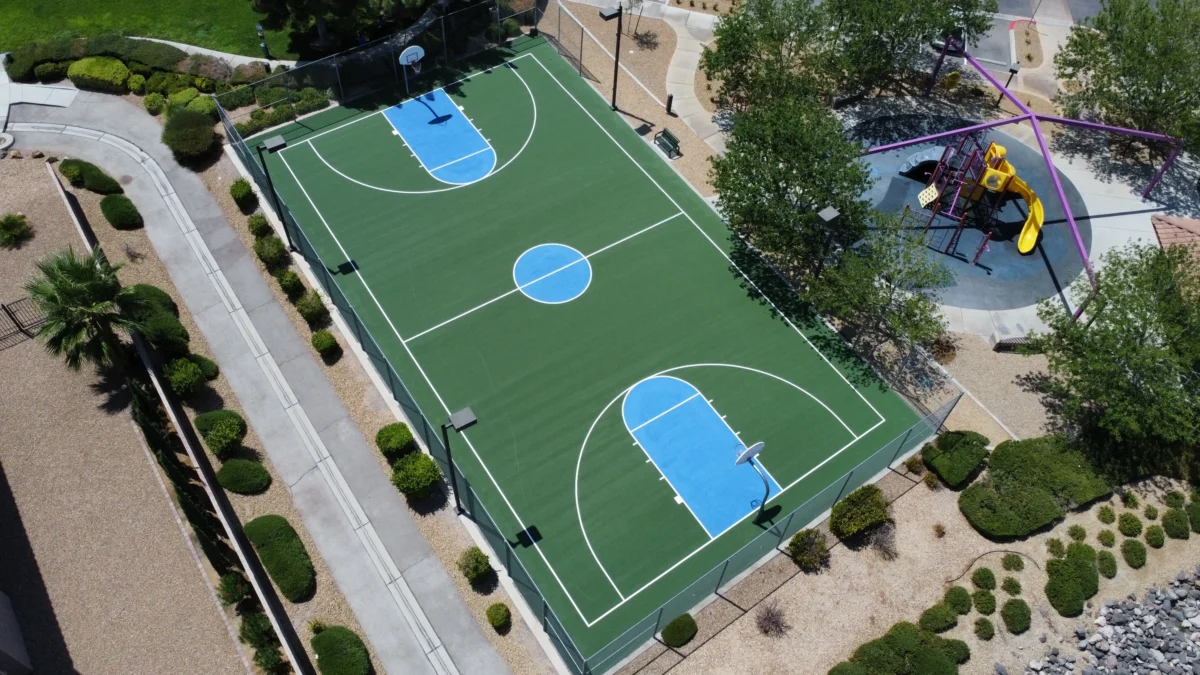
Sport Court Surface Types: Choosing Between Acrylic and Modular Systems

Sport Court Surface

Sport Court Surface Types: Choosing Between Acrylic and Modular Systems

Choosing a court surface is one of the highest-impact decisions in any sport court project. It affects how the court plays, how long it lasts, and how much maintenance it needs over time. This guide compares the main surface categories available for basketball, pickleball, tennis, and multi-sport courts so you can choose confidently.
 

Acrylic Coating Systems

 
Acrylic is a multi-coat surfacing system applied directly over a concrete or asphalt base. It remains the most widely used surface for outdoor sport courts because it balances performance, appearance, and cost effectively:
 
  • Consistent bounce and traction across the full court surface.
  • Full color customization, including two-tone designs, logos, and multi-sport line overlays.
  • Cost-effective relative to specialty and premium surface systems.
  • Recoat-friendly, meaning the surface can be refreshed rather than replaced as it ages.
 
The tradeoff is that acrylic performance depends heavily on the base beneath it. A great coating over a poorly built base will still fail early.
 

Cushioned Acrylic Systems

 
Cushioned acrylic adds a rubberized layer beneath the standard color coats, providing extra shock absorption. This upgrade is popular for courts with heavy daily use, training facilities, or households prioritizing joint protection for younger or more active players. It costs more than standard acrylic but extends comfort and reduces surface-related fatigue over long sessions.
 

Modular Tile Systems

 
Modular sports tiles are interlocking polypropylene tiles installed over an existing hard surface. Advantages include:
 
  • Faster installation with no cure time required before use.
  • Built-in drainage through a perforated tile design.
  • Forgiving over minor surface imperfections, since tiles float above small irregularities rather than requiring a perfectly smooth base.
  • Removability, useful for temporary installations or surfaces that may need to be relocated.
 
Tile systems trade some of acrylic’s design flexibility and classic look for speed, drainage, and installation flexibility.
 

Post-Tension Concrete and Base Considerations

 
While not a surface coating itself, the base beneath any surface system matters enormously, and post-tension concrete has become a popular base choice for courts (especially pickleball) because it resists the cracking that standard slab concrete is more prone to under heat-cycling stress. Choosing the right base is just as important as choosing the right surface coating.
 

How to Choose the Right Surface for Your Court

 
Choose standard acrylic for most backyard and commercial courts prioritizing appearance, cost, and long-term recoat-ability.
 
Choose cushioned acrylic for heavy-use courts, training facilities, or when joint impact is a real concern.
 
Choose modular tile when installation speed, drainage, or future removability matters more than achieving the classic painted-court look.
 

Climate-Specific Considerations for Las Vegas and Phoenix

 
Whatever surface type you choose, it needs to be rated for sustained high-heat and intense UV exposure. Generic coatings and lower-grade tile materials can degrade quickly under desert conditions that are more extreme than most of the country experiences. We select surface systems specifically suited to Las Vegas and Phoenix climates, not generic national products that underperform here.
 

FAQ

 
What’s the difference between acrylic and modular tile surfaces?
Acrylic is a painted coating system applied over a concrete or asphalt base, offering maximum design flexibility. Modular tile is an interlocking system installed over an existing hard surface, offering faster installation and built-in drainage.
 
Which surface type is more durable long-term?
Both can be very durable when installed correctly. Acrylic systems can be recoated over decades, while quality modular tile systems resist wear well and can sometimes be relocated.
 
Is cushioned acrylic worth the extra cost?
For courts with heavy daily use or a priority on joint protection, yes. For casual or light-use courts, standard acrylic usually performs just as well for less money.
 
Can modular tile be installed over a cracked or uneven surface?
Tile systems are more forgiving of minor imperfections than poured coatings, but significant cracking or heaving still needs to be addressed first.
 
Do surface types affect maintenance requirements?
Yes. Acrylic surfaces need periodic recoating every four to seven years. Modular tile systems generally require less frequent full replacement but individual tiles can be swapped if damaged.
 
How do I know which surface is right for my project?
The right choice depends on usage, budget, site conditions, and aesthetic preference. We help you weigh these factors during your site visit.
 
This page links to our acrylic sports court surface guide and our cost to build a court pillar page. Ready to choose your surface? Get a quote from Legendary Sport Construction today.
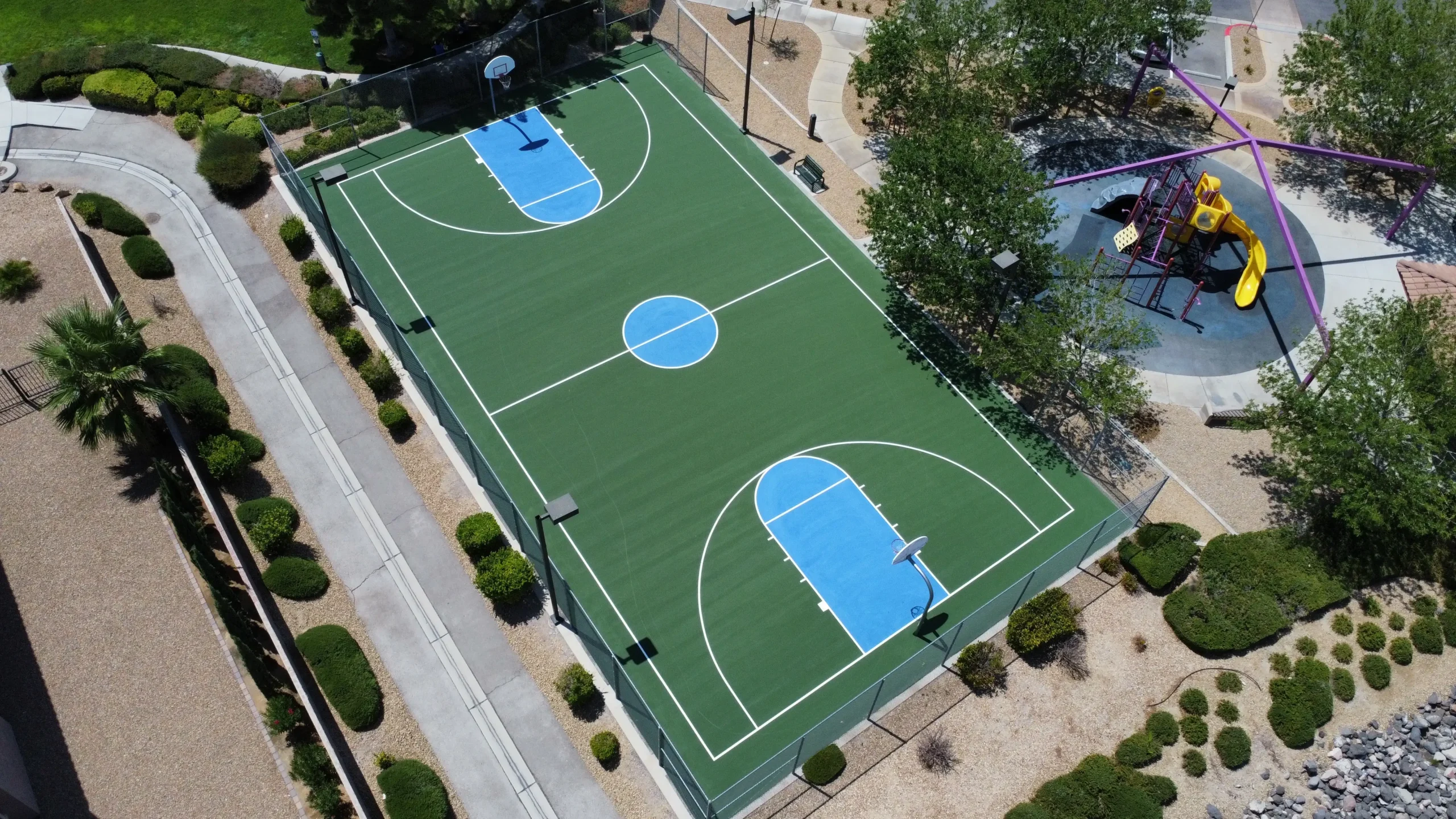
GET A QUOTE

Please Provide Your Contact Information and Project Details