DIY Tennis Court Resurfacing in North Las Vegas: Step-by-Step Guide, Materials & Tips

DIY Tennis Court Resurfacing in North Las Vegas: Step-by-Step Guide, Materials & Tips

DIY tennis court resurfacing in North Las Vegas is a practical and budget-friendly solution for homeowners, schools, and recreational property managers looking to restore aging courts without paying for full professional reconstruction. In Nevada’s harsh desert climate, outdoor courts are constantly exposed to extreme sun, intense UV rays, dry heat, and occasional sudden rainstorms—all of which contribute to cracking, fading, peeling coatings, and worn-out surfaces.

Over time, even well-built courts begin to show signs of deterioration. Cracks expand, colors fade, traction declines, and ball bounce becomes inconsistent. If left untreated, these issues worsen and eventually lead to costly structural repairs. Fortunately, with the right materials, preparation, and techniques, tennis court restoration DIY projects can significantly improve appearance, playability, and lifespan.

While professional resurfacing is always ideal for large-scale or heavily damaged courts, a carefully executed DIY resurfacing project can be highly effective for courts with moderate wear.

When Should You Resurface a Tennis Court?

Knowing when to resurface is critical. Acting early prevents deeper structural damage and keeps repair costs manageable.

Visible Surface Damage

The most obvious sign your court needs attention is visible deterioration.

Common Signs Include:

  • Small to medium surface cracks
  • Uneven low spots
  • Flaking acrylic coatings
  • Peeling paint layers

Minor cracks may seem harmless at first, but they quickly spread when exposed to heat expansion and moisture intrusion.

Prompt backyard court resurfacing helps stop small problems before they become major structural failures.

Poor Playing Conditions

Surface wear affects gameplay quality long before severe damage appears.

Gameplay Warning Signs:

  • Unpredictable ball bounce
  • Slippery dusty surface texture
  • Reduced traction underfoot
  • Faded or hard-to-see line markings

If the court feels inconsistent during play, resurfacing is likely overdue.

Weather Damage in North Las Vegas

Nevada’s climate accelerates court aging faster than many other regions.

Environmental Stress Factors:

  • Extreme summer temperatures
  • Intense UV radiation
  • Dry heat expansion cycles
  • Occasional flash storm runoff

Because of these conditions, tennis court repair Nevada property owners perform often needs to occur more frequently than in milder climates.

Many North Las Vegas courts require resurfacing every 4–6 years depending on usage.

DIY Tennis Court Resurfacing Steps

A successful resurfacing project follows a structured process. Skipping steps reduces durability and quality.

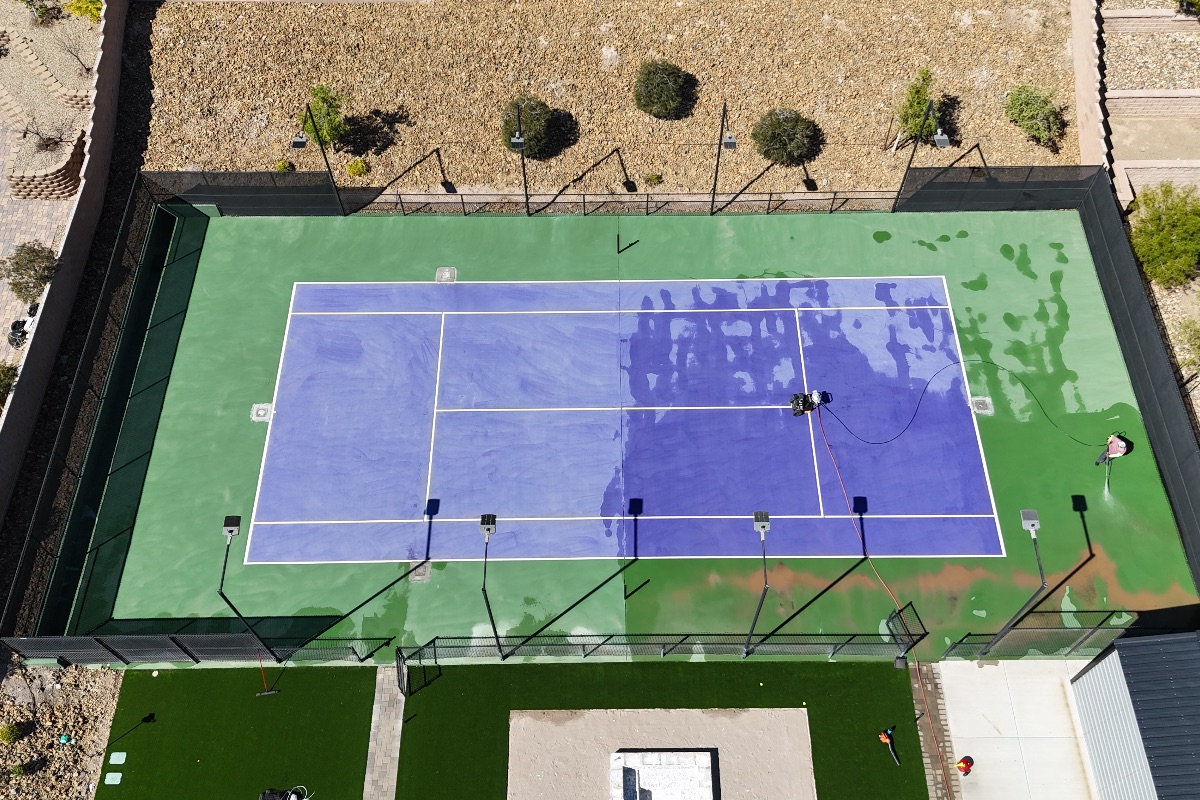
Step 1 – Clean the Entire Surface

Cleaning is the essential first stage before any repairs begin.

Cleaning Process:

  • Remove leaves, dirt, and loose debris
  • Sweep entire court thoroughly
  • Pressure wash lightly to remove embedded grime
  • Allow full drying time before next step

A clean surface ensures stronger bonding for repair compounds and resurfacing materials.

Never apply coatings over dirty or damp courts.

Step 2 – Repair Cracks and Imperfections

Crack repair is critical before resurfacing begins.

Repair Materials Needed:

  • Acrylic crack filler
  • Patch compounds
  • Leveling trowels

Repair Process:

  1. Fill cracks completely
  2. Smooth repaired areas evenly
  3. Allow proper curing time
  4. Sand rough spots if needed

Skipping crack repair is one of the most common DIY mistakes.

Proper crack repair strengthens long-term outdoor game court repair durability.

Step 3 – Apply Acrylic Resurfacer

Acrylic resurfacer creates a fresh bonding layer before color coatings are added.

Purpose of Acrylic Resurfacer:

  • Seals porous worn surfaces
  • Fills small texture imperfections
  • Creates smooth even base
  • Improves paint adhesion

Apply evenly using:

  • Heavy-duty rollers
  • Court squeegees
  • Spray systems if available

Acrylic court resurfacing creates the foundation for professional-looking results.

Step 4 – Apply Court Coating System

This stage restores color, traction, and playing texture.

Use Only:

Sport-grade acrylic athletic court paint

Application Tips:

  • Apply 2–3 coats for best durability
  • Allow drying between coats
  • Maintain even thickness throughout court

Popular court colors include:

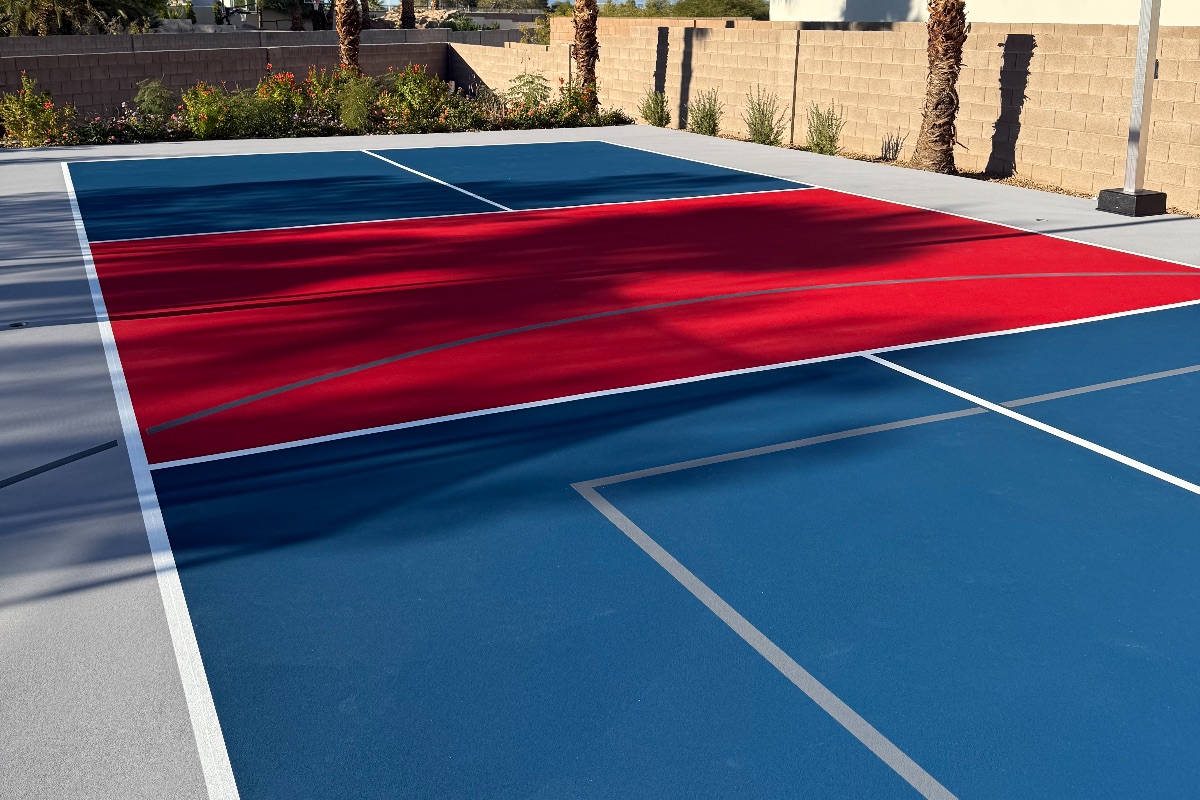
  • Blue and green combinations
  • Red and green classic schemes
  • Gray neutral tones

Proper coating restores both beauty and performance.

Step 5 – Add Court Striping

Once coatings dry completely, repaint all game lines.

Striping Process:

  • Measure official dimensions carefully
  • Use chalk lines for guidance
  • Apply painter’s tape for sharp edges
  • Paint lines evenly with striping paint

Optional upgrades include:

  • Pickleball overlay lines
  • Multi-sport striping additions

Accurate striping ensures regulation play and professional appearance.

Comparison Table – DIY vs Professional Resurfacing

Option

Best For

Main Advantage

Main Limitation

DIY Resurfacing

Moderate surface wear

Lower cost

More labor-intensive

Professional Resurfacing

Severe damage/full renewal

Expert precision

Higher cost

DIY Spot Repair Only

Minor isolated cracks

Fast repair

Temporary solution

Full Reconstruction

Structural base failure

Complete rebuild

Highest expense


Materials Needed for DIY Resurfacing

Having proper materials makes the process smoother and more effective.

Essential Materials Checklist:

  • Acrylic resurfacer
  • Sport-grade court paint
  • Acrylic crack filler compound
  • Rollers or spray equipment
  • Measuring tape
  • Chalk line reel
  • Painter’s tape
  • Cleaning broom and blower

Never substitute regular household paint for sports coatings.

Only court-grade materials deliver lasting performance.

Common DIY Mistakes to Avoid

Even experienced DIYers can make costly errors.

Skipping Crack Repair Before Coating

Paint alone cannot hide structural cracks.

Unrepaired cracks reopen quickly beneath coatings.

Applying Paint on Damp Surface

Moisture trapped beneath coatings causes:

  • Bubbling
  • Peeling
  • Poor adhesion failure

Always allow full drying time.

Uneven Coating Thickness

Thick spots dry poorly and create inconsistent bounce.

Apply coatings evenly across all sections.

Poor Line Alignment

Incorrect striping affects gameplay accuracy.

Always double-check measurements before painting.

Using Non-Sport-Grade Materials

Generic paints fade faster and lack athletic traction properties.

Use only specialized court products.

Benefits of Resurfacing Your Court

DIY resurfacing offers many practical advantages.

Key Benefits Include:

Restores Safe Playing Conditions

Smooth surfaces reduce slips and trip hazards.

Improves Ball Bounce Consistency

Even coatings restore predictable gameplay.

Enhances Backyard Appearance

Freshly resurfaced courts dramatically improve curb appeal.

Extends Court Lifespan

Timely resurfacing delays expensive reconstruction.

Enables Multi-Use Conversion

You can add pickleball lines or other sport layouts.

Resurfacing creates new recreational possibilities.

Can You Convert a Tennis Court into a Pickleball Court?

Yes—and resurfacing is the perfect time to do it.

Many homeowners combine tennis court restoration DIY with pickleball conversion by adding:

  • Pickleball striping overlays
  • Adjustable net systems
  • Multi-use color coding

This increases versatility without expanding space.

Frequently Asked Questions (FAQs)

Can you paint pickleball lines on a tennis court?

Yes, pickleball lines are commonly added during resurfacing to create dual-use multi-sport and game courtts.

How do you resurface a tennis court?

The process includes cleaning, crack repair, resurfacer application, color coating, and restriping the court.

How to paint a tennis court yourself?

Use court-grade acrylic paint, rollers or spray equipment, and follow official measurement guidelines carefully.

What kind of paint do you use on a tennis court?

Always use acrylic sport and game courtt paint specifically formulated for athletic surfaces.


How to turn a tennis court into a pickleball court?

Add official pickleball line striping, proper net placement, and optional color-coded overlays during resurfacing.

DIY tennis court resurfacing North Las Vegas homeowners undertake can be an excellent way to revive worn courts while saving money. With proper preparation, quality materials, and careful attention to detail, resurfacing can restore both beauty and performance to aging courts damaged by Nevada’s harsh desert climate.

Whether you are improving a private backyard court, performing outdoor game court repair, or planning a tennis-to-pickleball conversion, a well-executed resurfacing project adds years of safe, enjoyable play without the expense of full reconstruction.

Pickleball Court Installers: How to Choose the Right Experts for Your Backyard or Facility

Pickleball Court Installers: How to Choose the Right Experts for Your Backyard or Facility

Pickleball Court Installers: How to Choose the Right Experts for Your Backyard or Facility

Building a pickleball court is an exciting investment, whether for your home, community center, school, or sports facility. But creating a court that performs well for years requires more than just pouring concrete and painting lines. Hiring experienced pickleball court installers ensures your project is completed with expert precision, from initial planning to final striping.

Professional installers understand every stage of outdoor pickleball court construction, including grading, drainage, surfacing, and layout optimization. Their expertise helps avoid costly mistakes, ensures regulation standards are met, and creates a court that offers safe, consistent play for players of all ages and skill levels.

Whether you’re envisioning a residential court built by backyard pickleball court builders or a larger sports complex developed by multi-use game court builders, choosing the right installation team makes all the difference.

What Do Professional Pickleball Court Installers Do?

Professional pickleball court installation services handle every technical aspect of court development, ensuring the finished product combines durability, performance, and visual appeal.

Site Evaluation & Planning

Before any construction begins, installers assess your property to determine the most effective layout and design strategy.

This planning phase is critical because every site has unique factors that affect court performance.

Key Focus Areas Include:

  • Proper court orientation (north-south preferred)
  • Site slope and grading analysis
  • Drainage requirements
  • Soil stability evaluation
  • Space optimization for residential or commercial layouts

North-south court orientation is recommended because it minimizes sun glare during morning and afternoon games, improving player visibility and comfort.

Experienced pickleball court installers also identify potential site challenges early, such as uneven terrain, poor drainage zones, or limited yard space, allowing adjustments before construction begins.

For homeowners with compact spaces, backyard pickleball court builders often create custom layouts that maximize functionality without compromising play quality.

Base Construction & Preparation

The strength of any pickleball court begins beneath the surface.

A properly constructed base ensures:

  • Structural stability
  • Long-term durability
  • Crack resistance
  • Consistent ball bounce

Key Base Construction Steps:

Excavation and Grading
Installers remove existing soil or debris and prepare a level foundation area.

Sub-Base Preparation
Compacted gravel or aggregate layers create structural support beneath the court.

Concrete or Asphalt Installation
Most courts use either:

  • Reinforced concrete slabs
  • Asphalt paving systems

Concrete is often preferred for premium installations because it offers superior longevity and reduced maintenance.

Proper curing time is essential before surfacing begins. Rushing this step can lead to premature cracking or uneven settling.

Surface Installation

Once the base is cured and stable, installers apply the playing surface.

This stage directly affects:

  • Ball bounce consistency
  • Player traction
  • Joint comfort
  • Weather resistance

Common Surface Options:

Acrylic-Coated Concrete

This remains the most popular surface because it offers:

  • Excellent durability
  • Professional-level bounce
  • UV resistance
  • Minimal maintenance

Modular Interlocking Tiles

Modular pickleball court installation has become increasingly popular due to its flexibility and comfort.

Benefits include:

  • Shock absorption for joints
  • Fast installation
  • Replaceable damaged sections
  • Easy customization

This option works especially well for temporary or portable courts.

Synthetic or Resin-Based Flooring

These premium cushioned systems provide:

  • Enhanced player comfort
  • Reduced impact stress
  • Slip-resistant traction
  • High-end recreational appeal

The ideal surface depends on budget, climate, usage frequency, and desired playing experience.

Court Striping & Finishing

Precision striping transforms the surface into a fully functional court.

Accurate line placement is critical because even slight measurement errors can affect gameplay.

Standard Court Striping Includes:

  • Regulation court dimensions: 20 ft x 44 ft
  • Baselines and sidelines
  • Center service line
  • Non-volley zone (“kitchen”) markings

For shared spaces, multi-use game court builders may also add:

  • Basketball lines
  • Volleyball markings
  • Tennis overlays

Additional finishing features often include:

  • Net post installation
  • Fencing systems
  • Windscreens
  • Lighting fixtures

These finishing touches improve both performance and aesthetics.

Comparison Table – Types of Pickleball Court Installation Services

Installation Type

Best For

Surface Options

Key Advantage

Residential Backyard Court

Homeowners

Acrylic, modular tiles

Private family recreation

Commercial Sports Facility

Clubs & complexes

Acrylic concrete

High-volume durability

Modular Pickleball Court Installation

Temporary/flexible use

Interlocking tiles

Quick setup and portability

Multi-Use Game Court

Schools & communities

Multi-sport surfaces

Supports multiple games

Luxury Custom Court

Premium residential estates

Synthetic cushioned surfaces

High-end aesthetics and comfort


Benefits of Hiring Professional Installers

Choosing experienced pickleball court installers provides significant long-term advantages compared to DIY approaches.


Expert Design & Layout

Professionals ensure:

  • Regulation dimensions
  • Proper spacing clearances
  • Optimal sun orientation
  • Efficient space use

Even small design mistakes can compromise gameplay quality.

Durability and Longevity

Professional installation teams use:

  • Commercial-grade materials
  • Engineered drainage systems
  • Proven construction methods

This extends court lifespan while reducing repair costs.

Time Efficiency

DIY court projects can stretch over months.

Professional crews complete most installations faster because they have:

  • Specialized equipment
  • Experienced teams
  • Streamlined workflows

Safety Assurance

Proper drainage, leveling, and surface traction reduce risks such as:

  • Slips and falls
  • Water pooling hazards
  • Uneven bounce injuries

Safety is especially important for family and community courts.


Customization Options

Professional backyard pickleball court builders tailor each project to your specific needs.

Customization may include:

  • Court colors
  • Fencing height
  • Lighting systems
  • Seating areas
  • Multi-sport integrations

How to Choose the Right Pickleball Court Installer

Not all contractors specialize in game court construction. Choosing the right company requires careful evaluation.

Look for Specialized Experience

Select installers with proven expertise in:

  • Outdoor pickleball court construction
  • Residential backyard courts
  • Multi-sport recreational surfaces

Specialization matters because sports surfaces require unique technical knowledge.

Review Past Projects

Ask to see:

  • Project portfolios
  • Before-and-after photos
  • Customer testimonials

A strong portfolio demonstrates quality workmanship and design versatility.

Verify Full-Service Capabilities

Choose companies offering complete pickleball court installation services, including:

  • Site planning
  • Excavation
  • Base construction
  • Surface application
  • Striping and finishing

Full-service contractors simplify project coordination.

Ask About Surface Options

Good installers explain:

  • Surface pros and cons
  • Maintenance needs
  • Lifespan expectations
  • Climate suitability

Transparent guidance helps you make informed decisions.

Confirm Custom Design Flexibility

Every property is different.

Top-tier installers create custom solutions based on:

  • Yard dimensions
  • Budget constraints
  • Multi-sport needs
  • Aesthetic preferences


Common Mistakes to Avoid When Hiring Installers

Avoid these costly errors:

  • Choosing based only on the lowest price
  • Hiring general contractors without court experience
  • Skipping drainage planning
  • Ignoring warranty details
  • Overlooking maintenance recommendations

Quality installation saves money over time.

Frequently Asked Questions (FAQs)

What is the cheapest way to install a pickleball court?

The most affordable option is typically modular tile installation over an existing flat concrete surface. This reduces excavation and paving costs.

What is the best surface for a pickleball court?

Acrylic-coated concrete is widely considered the best balance of durability, bounce quality, and low maintenance.

What would the cost be of a pickleball court?

Costs vary depending on size, surface, and site conditions, but most residential courts range from $15,000 to $50,000 or more.

How thick does concrete need to be for a pickleball court?

Concrete slabs are generally 4 inches thick minimum, though some projects require thicker reinforced slabs depending on soil and climate.

How much does it cost to install a pickleball court?

Installation pricing depends on excavation, base prep, surface choice, fencing, lighting, and customization. Modular systems may cost less than fully paved courts.

Hiring professional pickleball court installers is the smartest way to ensure your court is built for performance, safety, and long-term durability. From grading and drainage to surfacing and final striping, experienced installers bring technical skill that transforms empty space into a professional-quality playing environment.

Whether you’re seeking backyard pickleball court builders for a residential retreat or multi-use game court builders for a larger recreational facility, choosing experts guarantees better results, fewer costly mistakes, and years of enjoyable play.

A great pickleball court starts with great installation—and the right team makes all the difference.

Pickleball Court Design: How to Create the Perfect Backyard or Multi-Use Court

Pickleball Court Design: How to Create the Perfect Backyard or Multi-Use Court

Pickleball Court Design: How to Create the Perfect Backyard or Multi-Use Court

Pickleball has become one of the fastest-growing sports in the world, and with that popularity comes a rising demand for thoughtfully planned pickleball court design. Whether you’re envisioning a private backyard pickleball court for family fun or a professional-grade multi-use pickleball court for multiple sports, the design process plays a crucial role in how enjoyable, safe, and durable your court will be.

A well-designed court is more than painted lines on pavement. It balances proper dimensions, smart layout planning, surface materials, drainage, lighting, and long-term maintenance considerations. The right pickleball court design transforms unused outdoor space into a high-value recreational feature that serves players of all ages and skill levels.

From homeowners seeking backyard pickleball court ideas to property developers building sports complexes, understanding the fundamentals of court planning helps ensure lasting performance and satisfaction.

Key Elements of Pickleball Court Design

Creating the ideal court starts with mastering the core design elements that affect gameplay, safety, and versatility.

Court Dimensions & Layout

The foundation of every successful pickleball court design begins with accurate court sizing and layout planning.

A regulation pickleball court measures:

  • 20 feet wide x 44 feet long

However, the actual play area should extend beyond the marked lines to allow for movement, safety, and comfort.

Recommended Layout Dimensions:

  • Minimum total play area: 30 ft x 60 ft
  • Ideal total space: 34 ft x 64 ft

These additional clearances give players room to serve, pivot, and chase shots without risking collisions.

An effective outdoor pickleball court layout also includes:

  • Clearly marked sidelines and baselines
  • Non-volley zone (“kitchen”) boundaries
  • Centerline markings for service areas
  • Buffer zones around perimeter edges

If your available space is limited, a custom pickleball court can be adapted creatively to fit your property while still maintaining regulation play dimensions where possible.

Surface Selection

Surface choice dramatically affects ball bounce consistency, traction, comfort, and maintenance requirements.

Common Surface Options:

Acrylic-Coated Concrete
This is one of the most popular choices because it offers:

  • Durable long-term performance
  • Consistent ball response
  • Low maintenance needs

Modular Tiles
A modular pickleball court design uses interlocking sport tiles that provide:

  • Easier installation
  • Shock absorption for joints
  • Portable or semi-permanent flexibility

Synthetic or Resin Surfaces
Ideal for players seeking comfort, these surfaces provide:

  • Cushioned underfoot feel
  • Reduced stress on knees and ankles
  • Enhanced slip resistance

When choosing a surface, consider your climate, budget, usage frequency, and desired maintenance level.

Net Systems & Accessories

No court is complete without a properly installed net system.

Regulation net specifications include:

  • 36 inches high at sidelines
  • 34 inches high at center

Quality net systems should feature:

  • Weather-resistant posts
  • Reliable tension mechanisms
  • Rust-resistant hardware

Additional accessories may include:

  • Ball containment fencing
  • Windscreens
  • Benches and seating
  • Scorekeeping stations

Premium accessories elevate both function and aesthetics in any custom pickleball court.

Multi-Use Court Integration

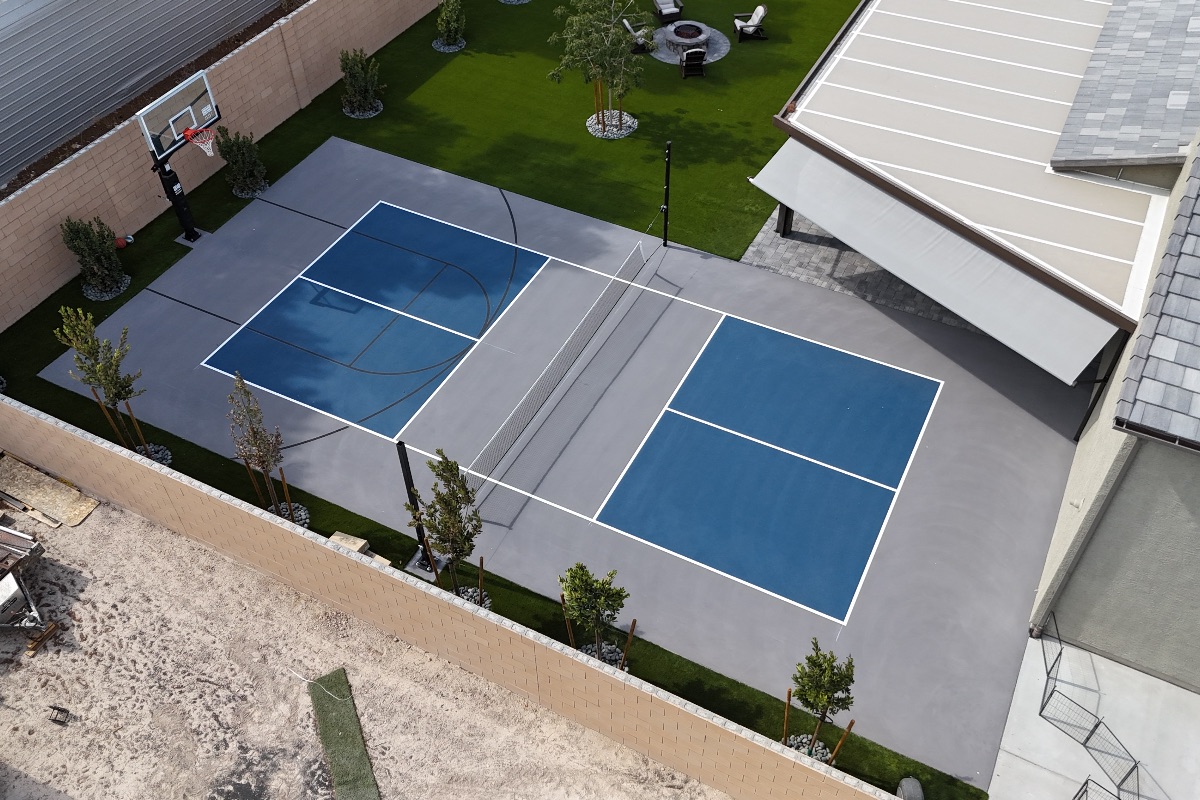
Many homeowners and facilities prefer a multi-use pickleball court that supports multiple sports on one surface.

This approach offers several advantages:

  • Maximizes usable backyard or recreational space
  • Supports basketball, volleyball, badminton, or tennis
  • Increases property versatility

With thoughtful striping and adaptable net systems, one court can serve multiple recreational purposes without sacrificing pickleball play quality.

Comparison Table – Pickleball Court Design Options

Design TypeBest ForSurface TypeKey Advantage
Standard Dedicated CourtSerious pickleball playersAcrylic concreteProfessional play quality
Backyard Pickleball CourtHomeownersModular tiles / resinSpace-efficient recreation
Multi-Use Pickleball CourtFamilies & communitiesMulti-sport surfacingVersatility for multiple games
Modular Pickleball Court DesignTemporary/flexible setupsInterlocking tilesEasy installation & portability
Custom Pickleball CourtUnique propertiesCustomized surfacesTailored to available space

Design Features That Enhance Performance

Beyond size and surface, advanced features improve both playability and longevity.

Proper Drainage

Water accumulation is one of the biggest threats to court lifespan.

Good drainage design:

  • Prevents puddling
  • Reduces surface erosion
  • Minimizes slipping hazards
  • Extends court durability

A slight slope or engineered drainage channel ensures proper runoff after rain.

Lighting Systems

If evening games are part of your vision, lighting becomes essential.

LED sports lighting provides:

  • Energy efficiency
  • Even illumination
  • Reduced glare
  • Extended play hours

Properly placed fixtures improve visibility without creating distracting shadows.

Fencing

Fencing enhances both convenience and safety.

Benefits include:

  • Keeps balls contained
  • Prevents interruptions
  • Defines court boundaries
  • Protects the surrounding landscaping

Fence heights typically range between 8 and 10 feet.

Color Contrast

Color selection affects visibility and gameplay experience.

Popular schemes include:

  • Blue courts with green borders
  • Green courts with red outer zones
  • Gray neutral professional designs

High contrast improves:

  • Ball tracking
  • Line visibility
  • Overall player accuracy

Cushion Layers

Adding cushioning beneath the top surface helps reduce joint strain, especially for older players or frequent users.

This is particularly valuable for:

  • Seniors
  • Competitive athletes
  • Long-duration recreational play

Cushioned systems are often integrated into modular pickleball court design setups.

Tips for Designing a Backyard Pickleball Court

When planning residential courts, thoughtful placement and material choices make all the difference.

Choose North-South Orientation

Positioning courts north-south minimizes sun glare during morning and afternoon play, improving player visibility.

Allow Extra Space Around Court Edges

Extra clearance improves safety and comfort, especially in compact backyard environments.

Use Multi-Sport Striping Wisely

If combining sports, keep line colors clearly differentiated to avoid confusion.

Example:

  • White for pickleball
  • Yellow for basketball
  • Blue for volleyball

Match Surface to Playing Style

For competitive players: acrylic concrete may be best.
For family recreation: cushioned modular tiles may be preferable.

Think Long-Term Maintenance

Choose materials that resist:

  • UV damage
  • Cracking
  • Mold buildup
  • Surface fading

Smart maintenance planning reduces future repair costs.

Backyard Pickleball Court Ideas for Different Spaces

Not every property is the same, which is why adaptable backyard pickleball court ideas matter.

Small Backyard Spaces

Compact solutions may include:

  • Half-court practice courts
  • Fold-away net systems
  • Modular tile surfaces

Luxury Residential Estates

High-end homes often incorporate:

  • Decorative fencing
  • Integrated lighting
  • Landscaped spectator seating
  • Premium synthetic surfacing

Shared Family Recreation Areas

Families often prefer:

  • Multi-use pickleball court combinations
  • Basketball hoop integration
  • Portable net systems

Flexible design creates year-round value.

Frequently Asked Questions (FAQs)

What is the correct size of a pickleball court?

A regulation pickleball court is 20 ft x 44 ft, but the recommended total play space is at least 30 ft x 60 ft.

Is pickleball good for high blood pressure?

Yes, pickleball can support cardiovascular health by encouraging moderate aerobic activity. However, anyone with high blood pressure should consult a physician before beginning regular play.

How to design a pickleball court?

Start by determining available space, selecting proper court dimensions, choosing surface materials, planning drainage, and installing regulation net systems.

What is the best surface for a pickleball court?

Acrylic-coated concrete is widely considered the best for durability and consistent bounce, though modular tiles are excellent for comfort and flexibility.

How much space is ideal for a pickleball court?

The ideal total area is 34 ft x 64 ft to allow safe movement beyond the playing boundaries.

A successful pickleball court design blends precision, durability, comfort, and creativity. Whether you’re planning a custom pickleball court for private residential use or developing a large-scale multi-use pickleball court, thoughtful planning ensures better gameplay and long-term satisfaction.

From selecting the ideal outdoor pickleball court layout to choosing surfaces, lighting, drainage, and accessories, every detail contributes to building a court that players will enjoy for years to come.

With the right strategy, your backyard can become more than just open space—it can become the ultimate pickleball destination.

Basketball Floor Installation: Complete Guide for Indoor & Outdoor Game Courts

Basketball Floor Installation: Complete Guide for Indoor & Outdoor Game Courts

Basketball floor installation is one of the most important factors in building a court that performs well, lasts for years, and keeps players safe. Whether you are creating a professional indoor hardwood court, a backyard recreational half-court, or a multi-sport outdoor surface, choosing the right flooring system directly affects gameplay quality, comfort, traction, and long-term maintenance.

A properly installed basketball court floor provides consistent ball bounce, reliable footing, and structural durability under repeated impact. Poor installation, on the other hand, can lead to uneven surfaces, premature wear, drainage issues, and expensive repairs. From selecting the right materials to preparing the foundation and applying final coatings, every step matters when creating a court built for performance.

This guide explains the most popular flooring systems, installation methods, and design considerations for both indoor and outdoor basketball courts.

Types of Basketball Flooring Systems

Different courts require different flooring materials depending on location, usage, budget, and performance expectations.

Hardwood Basketball Floors (Indoor)

Hardwood remains the gold standard for professional indoor basketball court flooring.

It is the preferred choice for:

  • Professional arenas
  • School gyms
  • Training facilities
  • Competitive indoor courts

Features:

  • Excellent ball bounce consistency
  • Smooth professional-grade finish
  • Premium visual appearance
  • Long-term durability with proper care

Maple hardwood is the most common material because it offers superior strength, shock resistance, and uniform grain patterns.

Hardwood floors require climate-controlled indoor environments for best performance.

Acrylic-Coated Concrete (Outdoor)

For outdoor basketball court installation, acrylic-coated concrete is one of the most popular options.

Features:

  • Durable in changing weather conditions
  • UV-resistant surface coatings
  • Slip-resistant texture
  • Low maintenance requirements

Concrete provides a stable long-lasting base, while acrylic coatings improve traction and appearance.

This system is ideal for:

  • Residential outdoor courts
  • Parks
  • Schools
  • Community recreation centers

Modular Interlocking Tiles

Modular basketball flooring has become increasingly popular for both residential and commercial use.

These tile systems snap together over concrete or flat surfaces.

Features:

  • Shock-absorbing comfort
  • Easy installation
  • Replaceable damaged sections
  • Indoor and outdoor compatibility

Tile systems are excellent for homeowners seeking flexible and upgradeable backyard basketball court solutions.

Synthetic Sports Flooring

Synthetic sports flooring is common in indoor multi-sport facilities where comfort and versatility are priorities.

Features:

  • Cushioned impact absorption
  • Reduced joint stress
  • Consistent traction
  • Multi-sport adaptability

These surfaces are often used in:

  • Recreation centers
  • Community gyms
  • Training complexes

Synthetic systems are ideal when basketball shares space with volleyball, badminton, or pickleball.

Comparison Table – Basketball Floor Installation Options

Flooring Type

Best For

Main Advantage

Consideration

Hardwood Flooring

Indoor competitive courts

Elite ball response

Higher cost and maintenance

Acrylic-Coated Concrete

Outdoor courts

Weather durability

Harder on joints

Modular Interlocking Tiles

Residential flexible courts

Easy repair and installation

Slightly different bounce feel

Synthetic Sports Flooring

Indoor multi-use spaces

Cushion and versatility

Moderate cost

Basketball Floor Installation Process

Proper installation requires a structured process to ensure safety, durability, and long-term court performance.

Step 1 – Site Preparation

Every successful basketball floor begins with a stable, level base.

For Outdoor Courts:

  • Excavate and level ground
  • Install compacted gravel base
  • Pour concrete slab
  • Ensure proper drainage slope

For Indoor Courts:

  • Inspect subfloor structure
  • Check moisture levels
  • Level slab surface
  • Install moisture barriers if needed

Base preparation determines long-term stability.

Uneven foundations lead to cracking, shifting, and poor bounce.

Step 2 – Flooring System Installation

Once the base is ready, the selected flooring system is installed.

Depending on Material:

Hardwood Flooring

  • Lay subfloor sleepers
  • Install maple planks
  • Sand and level surface

Modular Basketball Flooring

  • Snap interlocking tiles together
  • Secure perimeter edging
  • Check expansion gaps

Concrete Coatings

  • Apply acrylic resurfacer
  • Add textured sport coatings

Accurate alignment is essential for smooth gameplay.


Step 3 – Surface Coating and Finishing

Protective finishing improves both appearance and durability.

Finishing May Include:

  • Acrylic topcoats
  • UV-resistant sealants
  • Slip-resistant texture layers
  • Protective varnish (hardwood courts)

These coatings preserve the floor against wear, moisture, and sun exposure.

Step 4 – Court Striping and Setup

Once the surface is complete, the court is marked for gameplay.

Striping Includes:

  • Baselines
  • Sidelines
  • Free throw lane
  • Three-point arc
  • Center circle

Optional additions may include:

  • Multi-sport striping
  • Pickleball overlays
  • Volleyball markings

Final installation also includes hoops, backboards, and safety padding.

Key Factors to Consider Before Installation

Choosing the right court system depends on several important variables.

Indoor vs Outdoor Use

Indoor courts prioritize:

  • Performance precision
  • Cushioning comfort
  • Climate protection

Outdoor courts prioritize:

  • Weather resistance
  • UV protection
  • Drainage durability

Material choice should always match environment.

Available Space

Not every property accommodates full-size courts.

Common Layout Options:

  • Full regulation court
  • Half-court residential setup
  • Practice shooting lane
  • Compact recreational court

Measure carefully before finalizing design.

Player Type

Consider who will use the court most:

  • Casual family recreation
  • Competitive athletes
  • Youth practice
  • Community leagues

Usage intensity influences flooring durability needs.

Maintenance Requirements

Some flooring systems require more upkeep than others.

Low Maintenance:

  • Modular tiles
  • Acrylic-coated concrete

Higher Maintenance:

  • Hardwood floors
  • Synthetic cushioned systems

Choose materials based on your willingness to maintain them.

Multi-Sport Use

If the court supports multiple activities, flexible surfaces like modular basketball flooring or synthetic systems are ideal.

Benefits of Professional Basketball Floor Installation

While DIY courts are possible, professional installation offers major advantages.

Accurate Court Dimensions

Professionals ensure official measurements and proper spacing.

Better Player Safety

Correct leveling and traction reduce injury risks.

Increased Surface Lifespan

Proper installation methods extend floor durability.

Improved Visual Appeal

Professionally finished courts look cleaner and more polished.

Multi-Use Customization

Experts can design flexible courts for multiple sports.

Backyard Basketball Court Design Ideas

Residential courts can be customized creatively.

Popular Backyard Features:

  • Custom court colors
  • LED evening lighting
  • Adjustable hoop heights
  • Decorative fencing
  • Personalized logos

Modern backyard basketball court designs often become centerpiece entertainment spaces.

Frequently Asked Questions (FAQs)

What is the best flooring for a basketball court?

Hardwood is best for indoor professional courts, while acrylic-coated concrete and modular tiles are top choices for outdoor courts.

What is the cheapest way to install a basketball court?

Modular tile systems over an existing flat concrete slab are often the most affordable option.

What can you use instead of concrete for a basketball court?

Alternatives include asphalt bases, sport tile systems over compacted surfaces, or specialized subfloor platforms.

Can you DIY a basketball court?

Yes, smaller residential courts can be DIY-installed, especially modular tile systems, though professional prep is recommended for best results.

How thick should a concrete slab be for a basketball court?

Most basketball courts require concrete slabs at least 4 inches thick, depending on soil conditions and intended use.

Basketball floor installation is about much more than simply choosing a surface—it is about creating a court that performs consistently, protects players, and lasts for years. Whether you need premium indoor basketball court flooring, durable outdoor basketball court installation, or flexible modular basketball flooring for a multi-sport family space, the right system makes all the difference.

By carefully selecting materials, preparing a solid base, and following proper installation methods, you can build a court that delivers professional-quality performance and long-term value for every game played.

How to Paint a Pickleball Court: Step-by-Step Guide for a Professional Backyard Finish

How to Paint a Pickleball Court: Step-by-Step Guide for a Professional Backyard Finish

Painting a pickleball court is one of the most important steps in creating a high-quality playing surface that delivers both professional performance and long-lasting durability. Whether you’re transforming a driveway, resurfacing an old tennis court, or finishing a newly built backyard sports space, knowing how to paint a pickleball court correctly ensures accurate gameplay, clean court boundaries, and an attractive finished appearance.

A properly painted court is not simply about aesthetics. It affects ball bounce consistency, player traction, visibility, and safety. Using the correct materials, preparation techniques, and layout measurements can make the difference between a court that lasts for years and one that fades, cracks, or peels after one season.

This complete pickleball court painting guide walks you through every stage of the process—from preparing the surface to applying acrylic court paint and sealing the final finish.

Step 1 – Prepare the Court Surface

Before opening a paint can, surface preparation must come first. Skipping this stage is one of the biggest mistakes people make when learning how to paint a pickleball court.

A clean, level, and stable surface helps paint adhere properly and prevents premature cracking or peeling.

Clean and Repair the Surface

The first step is making sure the playing area is completely free of dirt, grease, and damage.

Key Actions:

  • Pressure wash the entire surface
  • Remove dust, debris, leaves, and oil stains
  • Fill cracks and holes with patching compound
  • Repair uneven or chipped areas
  • Allow full drying time before painting

Even hairline cracks should be repaired before painting because moisture can seep in and worsen damage over time.

If the surface is not fully dry before painting begins, trapped moisture may cause bubbling or peeling later.

Check Surface Type Compatibility

Different surfaces require different preparation methods before applying paint.

Concrete Surfaces:

Concrete courts require:

  • Thorough cleaning
  • Possible acid etching or primer application
  • Crack filling before painting

Asphalt Surfaces:

Asphalt surfaces may need:

  • Sealcoating before paint application
  • Surface stabilization if aging or brittle

Existing Coated Courts:

Previously painted courts often require:

  • Light sanding
  • Removal of loose peeling paint
  • Surface bonding primer if necessary

Understanding your outdoor pickleball court surface type helps ensure proper paint adhesion and long-term durability.

Step 2 – Mark the Court Layout

An accurate court layout is essential because even small measurement errors can affect gameplay quality.

Court striping must match official pickleball standards for regulation play.


Standard Pickleball Dimensions

Official pickleball court dimensions are:

  • Court size: 20 ft x 44 ft
  • Non-volley zone (“kitchen”): 7 ft from net on both sides
  • Recommended minimum total play area: 30 ft x 60 ft

For more comfortable movement space, many homeowners prefer larger layouts such as 34 ft x 64 ft.

When planning backyard pickleball court lines, always measure twice before marking.

Use Chalk or Tape for Precision

To create clean and accurate markings:

Tools Needed:

  • Measuring tape
  • Chalk line reel
  • Painter’s tape
  • Straight edge ruler

Process:

  1. Measure and mark all corners first
  2. Snap chalk lines for layout guides
  3. Apply painter’s tape along striping edges
  4. Double-check dimensions before painting

Painter’s tape creates crisp professional lines and prevents paint bleeding.

Precision at this stage determines the final appearance of your game court striping.

Step 3 – Apply Court Paint

Now comes the most visible and transformative phase: painting the court surface.

Choosing the correct paint and applying it properly ensures both beauty and durability.

Choose the Right Paint Type

Always use acrylic court paint specifically designed for athletic surfaces.

Standard household paint is not suitable because it lacks durability, traction texture, and UV resistance.

Benefits of Acrylic Court Paint:

  • UV-resistant against sun fading
  • Slip-resistant texture for safety
  • Weather-resistant durability
  • Long-lasting color retention

Acrylic court paint is specially formulated to withstand outdoor sports use and repeated foot traffic.

Apply Base Color First

The base coat creates the court’s main playing area color.

Common Court Colors:

Popular pickleball court color combinations include:

  • Blue playing area with green borders
  • Green center with red outer zones
  • Gray neutral courts for modern aesthetics

Application Methods:

Use:

  • Heavy-duty rollers
  • Professional paint sprayers
  • sport and game courtt squeegee applicators

Apply the first coat evenly and allow full drying before adding a second coat.

Two coats are generally recommended for the best coverage and durability.

Paint Court Lines

Once the base surface dries, paint the official boundary and service lines.

Best Practices:

  • Keep painter’s tape firmly sealed
  • Use contrasting white or yellow line paint
  • Apply thin even coats
  • Remove tape carefully after partial drying

Clean line striping is critical for visibility during gameplay.

Well-painted backyard pickleball court lines improve both function and appearance.

Step 4 – Seal and Finish the Court

Sealing is the final protective step that extends the life of your painted court.

While optional in some climates, sealing is highly recommended for outdoor courts exposed to sun and rain.

Benefits of Sealing:

  • Protects paint from fading
  • Increases weather resistance
  • Improves traction consistency
  • Reduces maintenance frequency
  • Extends court lifespan

Use a sports-surface-compatible sealer designed for acrylic athletic coatings.

Proper sealing can add several years to your court’s finish.

Comparison Table – Pickleball Court Painting Options

Painting Method

Best For

Pros

Cons

DIY Roller Application

Homeowners

Cost-effective

Time-consuming

Spray Application

Large courts

Fast coverage

Requires equipment

Professional Court Coating Service

Premium finishes

Expert precision

Higher cost

Modular Tile Painted Inserts

Temporary setups

Easy replacement

Less permanent


Common Mistakes to Avoid

Even well-planned projects can fail if common errors occur.

Avoid These Mistakes:

Skipping Surface Preparation

Dirty or cracked surfaces cause peeling paint and uneven finishes.

Incorrect Measurements

Misaligned lines make gameplay inaccurate and frustrating.

Using Non-Court-Grade Paint

Regular paint fades quickly and lacks sports traction properties.

Ignoring Drying Times

Rushing between coats weakens adhesion and durability.

Poor Tape Alignment

Crooked lines reduce professional appearance.

Careful attention to detail prevents costly repainting later.

Tips for Long-Lasting Results

To maximize the lifespan of your newly painted court:

  • Clean court regularly
  • Remove debris after storms
  • Reapply sealer every few years
  • Inspect annually for cracks
  • Touch up faded lines promptly

Routine maintenance protects your investment.

Best Color Choices for Visibility and Performance

Color affects both aesthetics and gameplay.

Recommended Color Combinations:

Blue and Green

Most common professional look.

Green and Red

Classic game court appearance.

Gray and White

Modern, elegant residential option.

Choose colors with strong contrast for better ball visibility and line tracking.

Frequently Asked Questions (FAQs)

What kind of paint do you use for a pickleball court?

Use acrylic court paint specifically designed for athletic outdoor surfaces. It provides UV resistance, traction, and long-lasting durability.

Can you paint a pickleball court on a tennis court?

Yes, many tennis courts are converted into pickleball courts using overlay striping and repainting.

What is the best color for a pickleball court?

Blue and green combinations are widely preferred because they offer excellent contrast and a professional appearance.

How to paint pickleball court lines on concrete?

Measure carefully, apply painter’s tape, use acrylic line paint, and remove tape after partial drying for sharp edges.

Can I paint straight over concrete?

Only if the concrete is properly cleaned, repaired, and primed if needed. Bare concrete often requires prep work before painting.

Learning how to paint a pickleball court properly ensures your court not only looks professional but performs like one, too. From careful surface prep to accurate measuring, quality acrylic court paint, and final sealing, each step contributes to a durable and visually sharp playing area.

Whether you’re creating a backyard recreational court or resurfacing a larger multi-use sports space, following this pickleball court painting guide helps you build a court that players will enjoy for years to come.

A well-painted court is more than a surface—it’s the foundation of every great game.


Building a pickleball court is an exciting investment, whether for your home, community center, school, or sports facility. But creating a court that performs well for years requires more than just pouring concrete and painting lines. Hiring experienced pickleball court installers ensures your project is completed with expert precision, from initial planning to final striping.

Professional installers understand every stage of outdoor pickleball court construction, including grading, drainage, surfacing, and layout optimization. Their expertise helps avoid costly mistakes, ensures regulation standards are met, and creates a court that offers safe, consistent play for players of all ages and skill levels.

Whether you’re envisioning a residential court built by backyard pickleball court builders or a larger sports complex developed by multi-use game court builders, choosing the right installation team makes all the difference.

What Do Professional Pickleball Court Installers Do?

Professional pickleball court installation services handle every technical aspect of court development, ensuring the finished product combines durability, performance, and visual appeal.

Site Evaluation & Planning

Before any construction begins, installers assess your property to determine the most effective layout and design strategy.

This planning phase is critical because every site has unique factors that affect court performance.

Key Focus Areas Include:

  • Proper court orientation (north-south preferred)
  • Site slope and grading analysis
  • Drainage requirements
  • Soil stability evaluation
  • Space optimization for residential or commercial layouts

North-south court orientation is recommended because it minimizes sun glare during morning and afternoon games, improving player visibility and comfort.

Experienced pickleball court installers also identify potential site challenges early, such as uneven terrain, poor drainage zones, or limited yard space, allowing adjustments before construction begins.

For homeowners with compact spaces, backyard pickleball court builders often create custom layouts that maximize functionality without compromising play quality.

Base Construction & Preparation

The strength of any pickleball court begins beneath the surface.

A properly constructed base ensures:

  • Structural stability
  • Long-term durability
  • Crack resistance
  • Consistent ball bounce

Key Base Construction Steps:

Excavation and Grading
Installers remove existing soil or debris and prepare a level foundation area.

Sub-Base Preparation
Compacted gravel or aggregate layers create structural support beneath the court.

Concrete or Asphalt Installation
Most courts use either:

  • Reinforced concrete slabs
  • Asphalt paving systems

Concrete is often preferred for premium installations because it offers superior longevity and reduced maintenance.

Proper curing time is essential before surfacing begins. Rushing this step can lead to premature cracking or uneven settling.

Surface Installation

Once the base is cured and stable, installers apply the playing surface.

This stage directly affects:

  • Ball bounce consistency
  • Player traction
  • Joint comfort
  • Weather resistance

Common Surface Options:

Acrylic-Coated Concrete

This remains the most popular surface because it offers:

  • Excellent durability
  • Professional-level bounce
  • UV resistance
  • Minimal maintenance

Modular Interlocking Tiles

Modular pickleball court installation has become increasingly popular due to its flexibility and comfort.

Benefits include:

  • Shock absorption for joints
  • Fast installation
  • Replaceable damaged sections
  • Easy customization

This option works especially well for temporary or portable courts.

Synthetic or Resin-Based Flooring

These premium cushioned systems provide:

  • Enhanced player comfort
  • Reduced impact stress
  • Slip-resistant traction
  • High-end recreational appeal

The ideal surface depends on budget, climate, usage frequency, and desired playing experience.

Court Striping & Finishing

Precision striping transforms the surface into a fully functional court.

Accurate line placement is critical because even slight measurement errors can affect gameplay.

Standard Court Striping Includes:

  • Regulation court dimensions: 20 ft x 44 ft
  • Baselines and sidelines
  • Center service line
  • Non-volley zone (“kitchen”) markings

For shared spaces, multi-use game court builders may also add:

  • Basketball lines
  • Volleyball markings
  • Tennis overlays

Additional finishing features often include:

  • Net post installation
  • Fencing systems
  • Windscreens
  • Lighting fixtures

These finishing touches improve both performance and aesthetics.

Comparison Table – Types of Pickleball Court Installation Services

Installation Type

Best For

Surface Options

Key Advantage

Residential Backyard Court

Homeowners

Acrylic, modular tiles

Private family recreation

Commercial Sports Facility

Clubs & complexes

Acrylic concrete

High-volume durability

Modular Pickleball Court Installation

Temporary/flexible use

Interlocking tiles

Quick setup and portability

Multi-Use Game Court

Schools & communities

Multi-sport surfaces

Supports multiple games

Luxury Custom Court

Premium residential estates

Synthetic cushioned surfaces

High-end aesthetics and comfort


Benefits of Hiring Professional Installers

Choosing experienced pickleball court installers provides significant long-term advantages compared to DIY approaches.


Expert Design & Layout

Professionals ensure:

  • Regulation dimensions
  • Proper spacing clearances
  • Optimal sun orientation
  • Efficient space use

Even small design mistakes can compromise gameplay quality.

Durability and Longevity

Professional installation teams use:

  • Commercial-grade materials
  • Engineered drainage systems
  • Proven construction methods

This extends court lifespan while reducing repair costs.

Time Efficiency

DIY court projects can stretch over months.

Professional crews complete most installations faster because they have:

  • Specialized equipment
  • Experienced teams
  • Streamlined workflows

Safety Assurance

Proper drainage, leveling, and surface traction reduce risks such as:

  • Slips and falls
  • Water pooling hazards
  • Uneven bounce injuries

Safety is especially important for family and community courts.


Customization Options

Professional backyard pickleball court builders tailor each project to your specific needs.

Customization may include:

  • Court colors
  • Fencing height
  • Lighting systems
  • Seating areas
  • Multi-sport integrations

How to Choose the Right Pickleball Court Installer

Not all contractors specialize in game court construction. Choosing the right company requires careful evaluation.

Look for Specialized Experience

Select installers with proven expertise in:

  • Outdoor pickleball court construction
  • Residential backyard courts
  • Multi-sport recreational surfaces

Specialization matters because sports surfaces require unique technical knowledge.

Review Past Projects

Ask to see:

  • Project portfolios
  • Before-and-after photos
  • Customer testimonials

A strong portfolio demonstrates quality workmanship and design versatility.

Verify Full-Service Capabilities

Choose companies offering complete pickleball court installation services, including:

  • Site planning
  • Excavation
  • Base construction
  • Surface application
  • Striping and finishing

Full-service contractors simplify project coordination.

Ask About Surface Options

Good installers explain:

  • Surface pros and cons
  • Maintenance needs
  • Lifespan expectations
  • Climate suitability

Transparent guidance helps you make informed decisions.

Confirm Custom Design Flexibility

Every property is different.

Top-tier installers create custom solutions based on:

  • Yard dimensions
  • Budget constraints
  • Multi-sport needs
  • Aesthetic preferences


Common Mistakes to Avoid When Hiring Installers

Avoid these costly errors:

  • Choosing based only on the lowest price
  • Hiring general contractors without court experience
  • Skipping drainage planning
  • Ignoring warranty details
  • Overlooking maintenance recommendations

Quality installation saves money over time.

Frequently Asked Questions (FAQs)

What is the cheapest way to install a pickleball court?

The most affordable option is typically modular tile installation over an existing flat concrete surface. This reduces excavation and paving costs.

What is the best surface for a pickleball court?

Acrylic-coated concrete is widely considered the best balance of durability, bounce quality, and low maintenance.

What would the cost be of a pickleball court?

Costs vary depending on size, surface, and site conditions, but most residential courts range from $15,000 to $50,000 or more.

How thick does concrete need to be for a pickleball court?

Concrete slabs are generally 4 inches thick minimum, though some projects require thicker reinforced slabs depending on soil and climate.

How much does it cost to install a pickleball court?

Installation pricing depends on excavation, base prep, surface choice, fencing, lighting, and customization. Modular systems may cost less than fully paved courts.

Hiring professional pickleball court installers is the smartest way to ensure your court is built for performance, safety, and long-term durability. From grading and drainage to surfacing and final striping, experienced installers bring technical skill that transforms empty space into a professional-quality playing environment.

Whether you’re seeking backyard pickleball court builders for a residential retreat or multi-use game court builders for a larger recreational facility, choosing experts guarantees better results, fewer costly mistakes, and years of enjoyable play.

A great pickleball court starts with great installation—and the right team makes all the difference.

Outdoor Basketball Court Tiles in Pahrump, NV: Durable & Low-Maintenance Backyard Flooring

Outdoor Basketball Court Tiles in Pahrump, NV: Durable & Low-Maintenance Backyard Flooring

nstalling outdoor basketball court tiles Pahrump NV homeowners can rely on is one of the smartest ways to build a long-lasting, comfortable, and visually appealing backyard game court. In a desert climate like Pahrump, outdoor surfaces face relentless sun, heat, dust, and temperature changes throughout the year. Traditional plain concrete courts can become harsh underfoot, overly hot, and prone to surface wear over time. That is why modular court tile systems have become such a popular option for residential and recreational court projects.

Today’s modular basketball court tiles Nevada property owners choose are engineered for outdoor durability, UV resistance, and better player comfort. They create a more forgiving surface than bare concrete, improve traction, and offer easier maintenance than many traditional court systems. Whether you are planning a simple shooting area, a half-court for family games, or a full recreational setup, modular tile flooring gives you the flexibility to create a court that fits your space and lifestyle.

For homeowners looking to upgrade their backyard into a more active and enjoyable environment, the right backyard basketball court flooring can turn an ordinary outdoor area into a reliable game space built for years of fun.

Why Choose Outdoor Court Tiles in Pahrump, NV?

Pahrump presents unique environmental challenges for outdoor sports surfaces. High temperatures, dry air, and strong UV exposure all demand materials that can hold up in desert conditions without quickly deteriorating. That is one of the biggest reasons modular tile courts have become such a practical solution.

Built for Desert Climate

Outdoor tile systems are specifically designed to handle environmental stress better than many other surface options. Instead of relying solely on a coated concrete finish, tiles create a protective playing layer that resists sun damage and allows the base below to remain shielded from direct wear.

Benefits include:

  • UV-resistant materials that help reduce fading
  • Expansion-friendly design that accommodates heat changes
  • Durable structure that performs well in dry climates
  • Longer-lasting color and surface integrity

In a place like Pahrump, where summer heat can be intense, choosing the right material is not just about appearance. It is about long-term function. Well-made outdoor game court tiles are built to withstand these conditions while maintaining their shape, grip, and playability.

Enhanced Player Comfort

Anyone who has played basketball on plain concrete knows it can be unforgiving. Hard landings, quick pivots, and repeated movement create more stress on knees, ankles, and lower back. Tile systems improve comfort by adding a more forgiving top layer and better shock distribution.

Benefits include:

  • Reduced impact on joints
  • More comfortable underfoot feel
  • Better traction for quick movements
  • Improved safety during cuts and turns

For family courts, comfort matters even more. Children, teens, and adults all benefit from a surface that feels safer and easier to play on for longer sessions.

Low Maintenance and Easy Repairs

One of the biggest advantages of modular flooring is how easy it is to maintain. Instead of resurfacing an entire court when damage occurs, individual tiles can often be replaced without major work.

Benefits include:

  • Easy cleaning with water or light washing
  • Less maintenance than coated-only surfaces
  • Damaged sections can be replaced tile by tile
  • No frequent resurfacing requirements

That low-maintenance appeal makes tile systems especially attractive for homeowners who want a beautiful court without constant upkeep.

Types of Outdoor Basketball Court Tiles

Not all court tiles are the same. Different systems are designed for different playing preferences, budgets, and environmental conditions. Understanding the options can help you choose the right fit for your project.

Open Grid Tile System

Open grid systems are among the most common choices for outdoor use. Their perforated design allows airflow and drainage, which helps the court stay drier and somewhat cooler in direct sunlight.

Features include:

  • Drainage-friendly design
  • Better airflow under the surface
  • Less water pooling after rain
  • Strong performance in outdoor environments

This style works well in areas where dust, occasional rainfall, and heat are part of the environment. For many homeowners, open grid tiles offer the best balance of durability and outdoor practicality.

Solid Surface Tiles

Solid tiles provide a more continuous playing feel and a cleaner visual appearance. They are often chosen when bounce consistency and polished aesthetics are a priority.

Features include:

  • Smooth, consistent ball response
  • Attractive finished look
  • Suitable for basketball and other sports
  • Good option for premium residential courts

These tiles can also support more refined multi-use court tiles Pahrump homeowners may want for combined sports layouts.

Cushioned Modular Tiles

Some modular systems include added cushioning or understructure designed to absorb more impact. These are especially useful for recreational courts where comfort is a major goal.

Features include:

  • Improved shock absorption
  • More forgiving playing experience
  • Comfortable for longer play sessions
  • Ideal for family-friendly court designs

If your goal is everyday fun, family recreation, or extended training sessions, cushioned systems can be an excellent choice.

Comparison Table – Outdoor Basketball Court Tile Options

Tile Type

Best For

Main Advantage

Consideration

Open Grid Tiles

Outdoor residential courts

Drainage and airflow

Slightly more textured feel

Solid Surface Tiles

Premium game courts

Cleaner appearance and bounce

Can feel warmer in direct sun

Cushioned Modular Tiles

Family and recreational use

Better comfort and joint support

Often higher cost

Multi-Sport Tile Systems

Shared-use backyard courts

Flexible sport compatibility

Requires thoughtful line layout

Installation Process for Outdoor Court Tiles

One of the reasons modular flooring is so appealing is that installation is faster and cleaner than many traditional court systems. That said, the final court is only as good as the base underneath it.

Step 1 – Base Preparation

Before tiles are installed, the court base must be stable, level, and properly drained. Most modular systems are installed over concrete or asphalt.

Base preparation includes:

  • Confirming the slab is level
  • Cleaning debris, dust, and loose material
  • Checking for cracks or uneven areas
  • Making sure water runoff is properly managed

A strong base is critical for performance. Even the best basketball court installation Nevada project will struggle if the foundation is uneven or poorly prepared.

Step 2 – Tile Layout and Installation

Once the base is ready, the tiles are laid out according to the court plan. Interlocking edges allow the pieces to snap together into a continuous playing surface.

This stage includes:

  • Creating the court layout
  • Snapping tiles together securely
  • Checking alignment and fit
  • Trimming perimeter pieces if necessary

Because modular systems are prefabricated, installation moves quickly compared to coatings and resurfacing systems that require curing time.

Step 3 – Line Striping and Accessories

After the tile surface is complete, the court can be finished with game lines and accessories. Some tile systems use painted striping, while others incorporate line colors within the tile layout.

Final touches may include:

  • Basketball court striping
  • Multi-sport line layouts
  • Hoop installation
  • Safety padding or fencing
  • Court edge transitions

These details make the court feel complete and ensure it functions well for the intended use.

Benefits of Outdoor Basketball Court Tiles

There is a reason more homeowners are choosing modular flooring instead of relying on plain concrete alone. The benefits are practical, visual, and long-term.

Quick Installation

Compared to fully coated or custom-poured systems, modular courts install much faster. Once the base is in place, the tile surface can go down quickly.

Durability in Harsh Weather

Pahrump weather is demanding, but tile systems are designed for outdoor exposure. Quality materials resist fading, cracking, and structural damage from heat.

Player Comfort and Safety

Tiles create a more comfortable playing experience, reduce harsh impact, and often improve traction for safer movement.

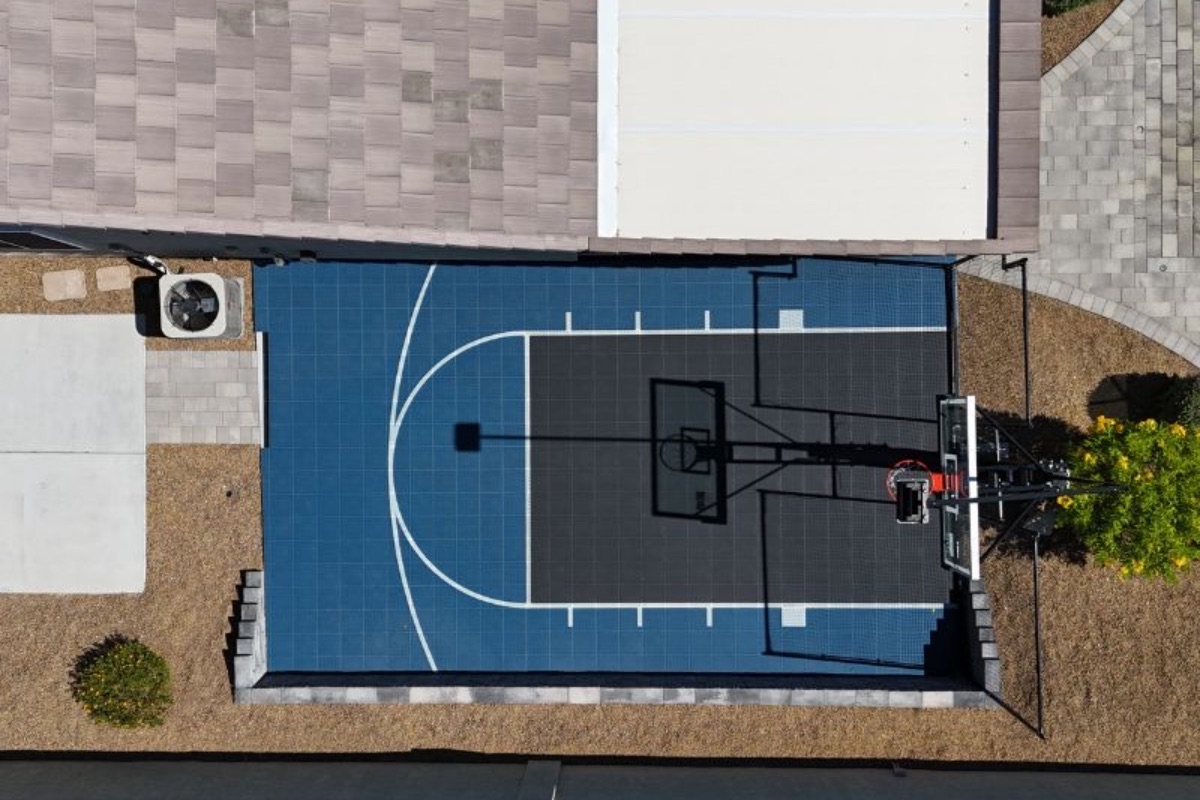
Custom Colors and Layouts

One of the most appealing features of modular systems is the ability to customize court colors, border designs, and sport layouts.

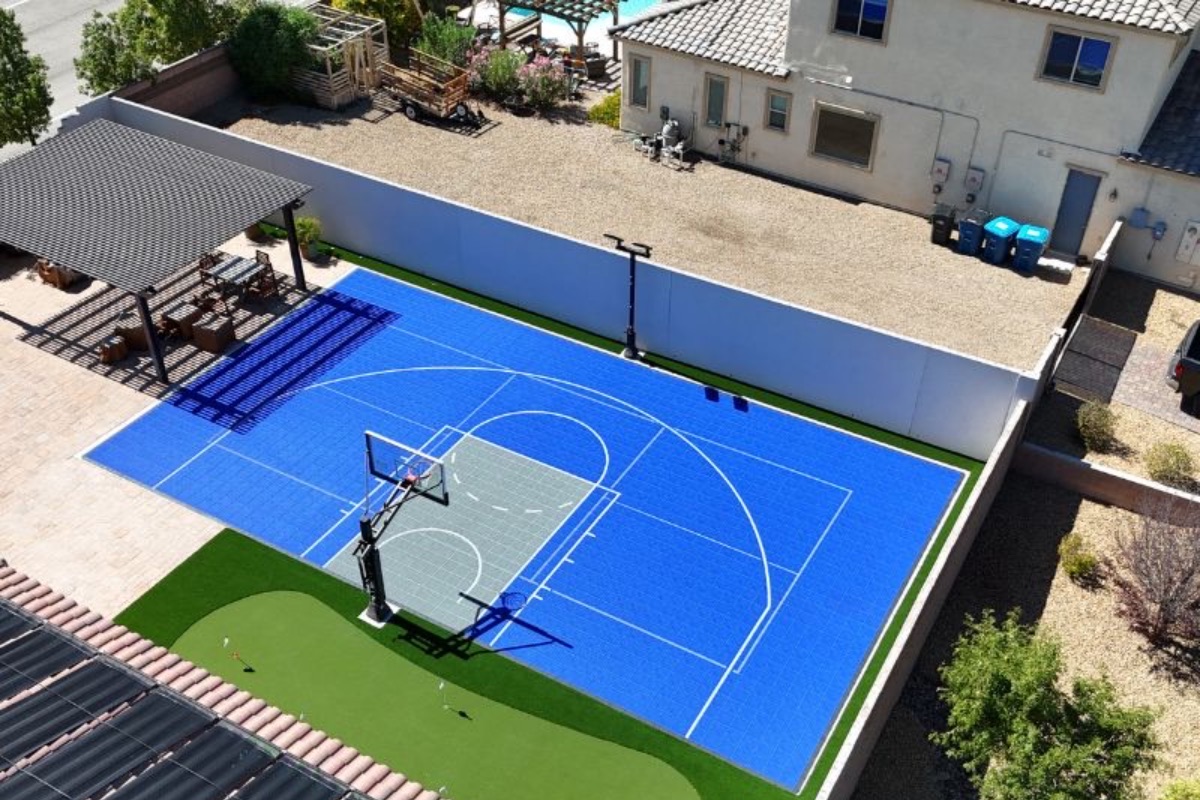
Ideal for Multi-Use Spaces

Many homeowners want more than basketball. A court can also be designed for volleyball, pickleball practice, or general recreation, making outdoor game court tiles a flexible choice.

Design Ideas for Backyard Courts in Pahrump

A basketball court does not have to be purely functional. It can also become a standout feature of the property.

Popular design options include:

  • Two-tone team-inspired court colors
  • Contrasting borders for a professional look
  • Half-court setups with custom logos
  • Combined basketball and pickleball layouts
  • Perimeter fencing for ball containment
  • LED lighting for evening games

With the right design, your court becomes more than just a place to play. It becomes part of your outdoor lifestyle.

Maintenance Tips for Modular Court Tiles

Even though tile courts are low maintenance, a little regular care goes a long way.

Recommended maintenance includes:

  • Sweep or blow off dust and debris regularly
  • Rinse with water when needed
  • Check connections around court edges
  • Replace damaged tiles promptly
  • Inspect base drainage after storms

Because the surface is modular, upkeep is much simpler than full resurfacing systems. That is one reason backyard basketball court flooring made from tiles appeals to so many homeowners.

Cost Considerations

Costs vary depending on the size of the court, tile quality, base condition, and added features like hoops, fencing, or lighting.

Typical cost factors include:

  • Existing concrete or asphalt base
  • Court dimensions
  • Tile system quality
  • Installation labor
  • Accessories and striping

A small residential half-court will cost much less than a full multi-sport backyard installation. Still, many homeowners see tile courts as a worthwhile long-term investment because of their durability and ease of maintenance.

Frequently Asked Questions (FAQs)

What is the best flooring for an outdoor basketball court?

The best flooring depends on your goals, but modular tile systems are one of the top choices because they provide durability, traction, comfort, and low maintenance for outdoor use.

What is the cheapest option for an outdoor basketball court?

The most affordable option is usually a basic concrete slab with a hoop, but it offers less comfort and flexibility than modular court systems.

How much does it cost to put in a basketball court outside?

Costs vary widely based on size, materials, and site conditions. A small backyard court can cost far less than a full-size multi-sport and game courtt with premium accessories.

Can modular tiles be used outdoors?

Yes. Many modular court systems are designed specifically for outdoor use and are made with UV-resistant, weather-resistant materials.

What can I use instead of concrete for an outdoor basketball court?

Some systems can be installed over asphalt or other stable hard surfaces, but most modular courts still require a firm, level base for proper performance.

Installing outdoor basketball court tiles Pahrump NV homeowners can trust is one of the best ways to build a court that performs well in desert conditions while staying comfortable, durable, and visually attractive. Whether you want a dedicated basketball setup or a more flexible recreational area, modular basketball court tiles Nevada property owners choose offer a practical alternative to plain concrete.

From easier repairs and low maintenance to improved traction and custom design options, modular systems provide real value for residential courts. If you are planning basketball court installation Nevada homeowners can enjoy for years, investing in quality multi-use court tiles Pahrump properties can support is a smart step toward creating a backyard game court that looks better, plays better, and lasts longer.

Pickleball Court for Backyard in Scottsdale, AZ: Design, Build & Installation Guide

Pickleball Court for Backyard in Scottsdale, AZ: Design, Build & Installation Guide

Pickleball Court for Backyard in Scottsdale, AZ: Design, Build & Installation Guide

Installing a pickleball court for backyard Scottsdale AZ homes has quickly become one of the most desirable outdoor upgrades for homeowners seeking recreation, wellness, and added property value. In a city known for sunshine, luxury living, and active lifestyles, Scottsdale provides the perfect environment for building a private backyard court that can be enjoyed nearly every day of the year.

Whether you’re creating a dedicated pickleball court or designing a backyard multi-use court Scottsdale families can enjoy for several sports, the right planning makes all the difference. Surface selection, court orientation, drainage, materials, and installation quality all affect how well your court performs over time.

A professionally designed backyard pickleball court Scottsdale homeowners invest in can become a centerpiece for exercise, entertainment, family gatherings, and long-term home enjoyment.

Why Install a Backyard Pickleball Court in Scottsdale, AZ?

Scottsdale offers unique advantages that make backyard pickleball courts especially appealing compared to many other parts of the country.

Perfect Weather for Year-Round Play

One of the biggest reasons homeowners choose outdoor pickleball court Arizona installations is the climate.

Scottsdale’s warm desert weather allows for nearly uninterrupted outdoor recreation throughout most of the year.

Benefits Include:

  • Extended playing seasons
  • Minimal weather interruptions
  • Reliable year-round outdoor activity
  • More consistent use of your investment

Unlike colder climates where courts sit unused for months, Scottsdale residents can enjoy regular daily or weekly pickleball sessions almost year-round.

Morning and evening games are especially enjoyable during warmer months when temperatures are milder.

High Demand for Home Recreation Spaces

Outdoor living has become a major priority for Scottsdale homeowners.

Luxury backyard spaces increasingly include:

  • Resort-style pools
  • Outdoor kitchens
  • game courts
  • Entertainment patios

A backyard pickleball court Scottsdale property owners install adds both function and prestige to residential spaces.

Lifestyle Benefits:

  • Enhances home entertainment value
  • Creates a private recreation zone
  • Offers convenient on-demand exercise
  • Supports family-friendly activities

Private courts eliminate the need to reserve public courts or travel to crowded recreation centers.

Multi-Use Potential

Many Scottsdale homeowners prefer courts that serve more than one purpose.

A backyard multi-use court Scottsdale installation can combine:

  • Pickleball
  • Basketball
  • Volleyball
  • Badminton

Multi-sport designs maximize available yard space and create flexibility for families with diverse recreational interests.

This versatility makes custom court installations especially attractive for households with children or frequent guests.

Best Surface Options for Backyard Pickleball Courts

Surface choice plays a major role in court performance, maintenance needs, and comfort.

Because Scottsdale experiences intense UV exposure and heat, selecting weather-resistant materials is critical.

Acrylic-Coated Concrete

Acrylic-coated concrete remains one of the most popular choices for pickleball court builders Scottsdale AZ homeowners hire.

Advantages:

  • Excellent heat resistance
  • Durable under intense sun exposure
  • Consistent professional ball bounce
  • Low long-term maintenance

This surface offers a tournament-style playing experience and is ideal for serious players.

Proper UV-resistant coatings help reduce fading over time.

Modular Interlocking Tiles

Modular tiles are increasingly popular for flexible residential installations.

Advantages:

  • Shock-absorbing comfort
  • Easier repairs and replacement
  • Quick installation process
  • Custom color design options

Tile systems also stay slightly cooler than some hard-coated surfaces, making them appealing in Arizona heat.

For homeowners seeking faster Scottsdale game court installation, modular systems often reduce construction timelines.

Synthetic Game Court Surfaces

Synthetic cushioned surfaces provide added comfort and joint protection.

Advantages:

  • Reduced joint strain
  • Slip-resistant texture
  • Enhanced player comfort
  • Multi-sport compatibility

These surfaces are especially beneficial for older players or families seeking safer recreational play.

Comparison Table – Backyard Pickleball Court Options in Scottsdale

Surface Type

Best For

Durability

Comfort Level

Maintenance

Acrylic-Coated Concrete

Competitive play

Excellent

Moderate

Low

Modular Interlocking Tiles

Flexible family use

Very Good

High

Low

Synthetic Cushioned Surface

Comfort-focused play

Very Good

Excellent

Moderate

Asphalt with Acrylic Finish

Budget-conscious projects

Good

Moderate

Moderate


Backyard Pickleball Court Installation Process

Professional installation ensures long-lasting results and proper play performance.

Site Evaluation & Planning

The first phase begins with analyzing your backyard space.

Installers Assess:

  • Available dimensions
  • Ground slope and grading
  • Drainage conditions
  • Sunlight direction
  • Access routes for construction equipment

North-south court orientation is generally preferred to reduce glare during morning and afternoon play.

Proper planning ensures the pickleball court for backyard Scottsdale AZ homes fits seamlessly into the property layout.

Base Construction

A strong base is critical to prevent cracking and uneven surfaces later.

Construction Includes:

  • Excavation and leveling
  • Gravel sub-base preparation
  • Concrete or asphalt slab installation
  • Surface curing time

Concrete is often preferred in Scottsdale due to its durability under desert climate conditions.

Improper base preparation is one of the most common causes of court failure.

Surface Installation

After curing, installers apply the selected playing surface.

Depending on material choice, this may involve:

  • Acrylic coating layers
  • Tile system installation
  • Synthetic surface bonding

Each system requires precise leveling for proper bounce consistency.

Professional Scottsdale game court installation teams ensure surface adhesion withstands Arizona heat fluctuations.

Striping & Final Setup

The finishing stage brings the court to life.

Final Steps Include:

  • Regulation pickleball line striping
  • Net system installation
  • Fence installation (optional)
  • Lighting additions (optional)
  • Final quality inspection

Standard pickleball dimensions remain:

  • 20 ft x 44 ft playing court
  • Minimum recommended total area: 30 ft x 60 ft

Benefits of a Backyard Court in Scottsdale

A private court offers more than just recreation—it transforms your outdoor lifestyle.

Key Benefits:

Private Recreation Space

Enjoy play anytime without crowded public courts or reservations.

Low Maintenance Entertainment

Modern court surfaces require minimal upkeep compared to lawns or pools.

Multi-Sport Flexibility

One court can support several games in one space.

Increased Property Appeal

Custom game courts enhance home desirability and resale value.

Active Lifestyle Support

Encourages regular movement and healthy outdoor exercise year-round.

Cost Considerations for Scottsdale Backyard Courts

Costs vary depending on:

  • Court size
  • Surface type
  • Base construction complexity
  • Fencing and lighting additions
  • Drainage needs

Typical residential projects may range from:

Estimated Cost Range:

  • Basic court: $15,000–$25,000
  • Mid-range custom court: $25,000–$45,000
  • Premium luxury court: $45,000+

Custom features such as decorative fencing, premium lighting, and multi-sport striping increase pricing.

Design Tips for Arizona Climate

Because Scottsdale temperatures can be extreme, smart design choices improve comfort.

Recommended Arizona Design Tips:

  • Use UV-reflective surface coatings
  • Install shade structures nearby
  • Choose lighter court colors to reduce heat absorption
  • Add perimeter landscaping for cooling aesthetics
  • Include evening lighting for cooler nighttime play

These upgrades improve comfort during summer months.

Frequently Asked Questions (FAQs)

Can pickleball be played in the backyard?

Yes, pickleball is ideal for residential backyards as long as there is sufficient space for safe court dimensions and movement clearance.

How many steps do you get playing pickleball for 2 hours?

Players often average between 4,000 and 8,000 steps during two hours of active pickleball, depending on intensity.

Is pickleball popular in Arizona?

Yes, Arizona is one of the fastest-growing pickleball regions in the country due to its active communities and ideal outdoor climate.

What is the best size for a backyard pickleball court?

The ideal total play area is 34 ft x 64 ft, though smaller spaces may still accommodate compact custom layouts.

What parks in Scottsdale have pickleball courts?

Several Scottsdale parks offer public pickleball access, including Indian School Park, Horizon Park, and Cholla Park.

A pickleball court for backyard Scottsdale AZ properties is more than a luxury upgrade—it’s an investment in recreation, health, and property enjoyment. With Scottsdale’s sunny climate, high-end outdoor living culture, and strong pickleball community, private courts have become one of the most valuable residential enhancements available.

Whether you want a dedicated pickleball court, a backyard multi-use court Scottsdale families can enjoy together, or a luxury custom-designed game space, working with experienced pickleball court builders Scottsdale AZ ensures your project is built for durability, beauty, and years of unforgettable play.

Small Backyard Basketball Court Ideas: Smart Designs for Limited Outdoor Spaces

Small Backyard Basketball Court Ideas: Smart Designs for Limited Outdoor Spaces

A small backyard does not mean you have to give up on having a basketball court. In fact, some of the best home sports spaces are created through clever planning, efficient layouts, and the right surface materials. With smart design, even a limited outdoor area can become a functional court for shooting practice, casual games, fitness, and family fun.

Today, more homeowners are exploring small backyard basketball court ideas because they want to maximize outdoor space without sacrificing style or playability. Whether you have room for a half-court setup, a corner shooting zone, or a multi-use recreational surface, a compact court can still deliver durability, performance, and long-term value.

The key is to choose a layout that fits your property, select the right flooring system, and incorporate practical features that make the court feel larger, safer, and easier to enjoy. A thoughtfully planned compact backyard basketball court can transform an underused yard into one of the most exciting and valuable spaces on your property.

Best Small Backyard Basketball Court Ideas

When space is limited, the design has to work harder. The most effective small-court layouts focus on smart positioning, efficient use of dimensions, and features that support everyday recreational play.

Half-Court Compact Design

A half court basketball backyard layout is one of the most popular options for homeowners with limited space. It provides enough room for shooting, dribbling, one-on-one games, and casual practice without requiring the footprint of a full-size court.

Features include:

  • One hoop setup
  • Reduced space requirements
  • Great for free-throw practice and layup drills
  • Ideal for family recreation and youth play

A half-court design works especially well in rectangular yards where the hoop can be placed at one end with enough open area in front for movement. This layout is often the best balance between realism and space efficiency.

Corner Basketball Court Setup

If your backyard is especially tight or has an irregular shape, a corner court may be the best solution. This design places the hoop in a corner section of the yard, allowing you to carve out a compact practice area without taking over the entire outdoor space.

Features include:

  • Hoop placed in a corner area
  • Minimal footprint design
  • Works well in narrow or awkward yard layouts
  • Great for quick daily practice sessions

This option is excellent for homeowners who want a basketball zone without a full court feel. It is simple, functional, and surprisingly effective for practice.

Driveway Basketball Conversion

One of the most practical driveway basketball court ideas is to convert part or all of an existing driveway into a game area. If you already have a level paved surface, you may not need major construction at all.

Features include:

  • Uses an existing flat concrete or asphalt surface
  • Easy to add line striping
  • Budget-friendly compared to full new court builds
  • Can be upgraded gradually over time

This approach is a smart choice for homeowners who want a playable court without committing a large section of the yard to a permanent sports installation.

Multi-Use Backyard Court

A small backyard court becomes even more valuable when it supports multiple sports. A backyard game court design that combines basketball with another activity like pickleball, volleyball, or general play can maximize every square foot.

Features include:

  • Basketball and pickleball layout integration
  • Flexible line marking systems
  • Great for family recreation
  • Makes limited space work harder

A multi-use court is especially helpful for families with children of different ages and interests. One compact space can support a wide range of activities without needing multiple separate outdoor features.

Best Surface Options for Small Backyard Courts

The surface you choose affects everything from comfort and durability to maintenance and overall appearance. For small courts, flooring choice matters even more because the space needs to perform efficiently.

Acrylic-Coated Concrete

Acrylic-coated concrete is one of the most common surfaces for outdoor residential courts.

Benefits include:

  • Strong weather resistance
  • Smooth and consistent ball bounce
  • Long-lasting outdoor durability
  • Low routine maintenance

This is a solid choice for homeowners who want a permanent court with a more traditional basketball feel. It works especially well when the base already exists or when building a new court from the ground up.

Modular Interlocking Tiles

Modular backyard court flooring has become increasingly popular for compact residential courts because it offers comfort, flexibility, and easier installation.

Benefits include:

  • Shock-absorbing feel underfoot
  • Easier to install than some full coating systems
  • Damaged sections can be replaced individually
  • Great for custom small-space layouts

For many homeowners, modular tiles are the ideal solution for a compact backyard basketball court because they are available in different colors, can be installed over existing hard surfaces, and often feel more forgiving than bare concrete.

Painted Concrete Surface

For a more budget-conscious project, a painted concrete court may be enough to create a usable and attractive game area.

Benefits include:

  • Lower upfront cost
  • Straightforward installation
  • Clean visual appearance
  • Can work well for small practice zones

The tradeoff is that painted surfaces may require more maintenance over time and generally do not offer the same comfort level as modular tile systems.

Comparison Table – Small Backyard Basketball Court Ideas

Court Idea

Best For

Main Advantage

Consideration

Half-Court Compact Design

Small to medium backyards

Most realistic play feel

Needs more room than corner setups

Corner Basketball Court

Very tight spaces

Minimal footprint

Limited movement area

Driveway Basketball Conversion

Existing paved surfaces

Budget-friendly

Shared use with vehicles

Multi-Use Backyard Court

Families and versatile recreation

Supports multiple activities

More complex layout planning

Design Tips for Small Backyard Courts

A limited footprint requires smart design choices. The right details can make a small court feel bigger, safer, and more useful.

Use Vertical Space Efficiently

If floor space is limited, use the vertical dimension wisely. Wall-mounted hoops or adjustable hoop systems can save room while keeping the playing area open.

This approach is especially helpful in narrow yards or driveway installations where every foot matters.

Choose Lighter Court Colors

Lighter shades can make a compact court feel more open and visually spacious. They also tend to stay a bit cooler under direct sun than darker colors.

Good color strategies include:

  • Light gray with dark border accents
  • Soft blue with white lines
  • Tan or neutral tones for modern backyard aesthetics

A smart color palette helps the court blend well with landscaping while enhancing visibility.

Add Compact Fencing or Boundaries

Even a small court benefits from clear edges. Low-profile fencing, boundary markers, or short retaining walls can help keep balls contained without making the area feel boxed in.

This improves both safety and convenience.

Position the Court to Avoid Sun Glare

Whenever possible, orient the court so players are not forced to shoot directly into harsh afternoon sunlight. Proper placement can make a major difference in comfort and usability.

Combine Sports Lines Carefully

If you are building a multi-use area, use color-coded striping so each sport remains easy to follow. Thoughtful marking makes the court more functional without creating visual confusion.

Benefits of a Small Backyard Basketball Court

A compact court may take up less room, but it still delivers major value.

Maximizes Limited Outdoor Space

A well-designed small court makes the most of the space you have. Instead of leaving a side yard, patio extension, or unused backyard section underutilized, you can turn it into an active recreational zone.

Encourages Daily Physical Activity

One of the biggest advantages of having a home court is convenience. It becomes easy to step outside for a quick game, a few practice shots, or an active break during the day.

Increases Home Recreation Value

A smart backyard game court design adds appeal for families and can make your home more distinctive. It is both a lifestyle upgrade and a practical property enhancement.

Easier to Maintain Than Larger Courts

Smaller courts require less cleaning, less material, and often lower repair costs. That makes them more manageable over the long term.

Can Be Upgraded Over Time

Many small court projects begin simply and evolve later. You might start with a hoop and painted surface, then add modular backyard court flooring, striping, lighting, or fencing in future phases.

Budget-Friendly Ideas for Small Backyard Courts

A compact court can also be easier on the budget than a full-size installation.

Ways to keep costs manageable include:

  • Use an existing driveway or patio slab
  • Start with a single hoop and simple striping
  • Install a half-court instead of a full court
  • Choose modular tiles only for the key playing zone
  • Add accessories like lighting later

This phased approach makes it possible to create a great court without doing everything at once.

Accessories That Improve Small Courts

A few well-chosen features can make a big difference in how enjoyable the court feels.

Popular additions include:

  • Adjustable hoop systems
  • Ball containment netting
  • LED lighting for evening play
  • Storage benches for basketballs and gear
  • Painted key and free-throw zones for a pro-style look

Because the court footprint is smaller, these upgrades often feel more affordable and impactful.

Frequently Asked Questions (FAQs)

What is the cheapest way to make a basketball court in your backyard?

The cheapest option is usually to install a hoop over an existing driveway or concrete slab and add simple striping for a basic practice area.

What is the cheapest option for an outdoor basketball court?

A painted concrete surface or driveway conversion is generally the most affordable option, especially if the hard surface already exists.

What is a good size for a backyard basketball court?

A good size depends on your space, but many homeowners choose a half-court setup or a smaller shooting area that fits comfortably within the yard while still allowing movement.

What is the best material for a backyard basketball court?

It depends on your goals. Acrylic-coated concrete offers durability, while modular backyard court flooring offers added comfort and easier upgrades.

What can I use instead of concrete for an outdoor basketball court?

You can use asphalt or install modular tiles over a stable hard base. Many homeowners prefer tile systems for comfort and flexibility.

The best small backyard basketball court ideas prove that you do not need a huge yard to create a fun, durable, and useful outdoor sports space. With the right layout, materials, and finishing details, even a limited area can become a high-performing compact backyard basketball court for family recreation, fitness, and everyday enjoyment.

Whether you choose a half court basketball backyard setup, explore creative driveway basketball court ideas, or build a flexible backyard game court design with modular backyard court flooring, thoughtful planning makes all the difference. A small court may take up less room, but when designed well, it can deliver big value.

Outdoor Basketball Court Flooring Material: Best Surface Options for Durable Backyard Game Courts

Outdoor Basketball Court Flooring Material: Best Surface Options for Durable Backyard Game Courts

Selecting the right outdoor basketball court flooring material is one of the most important decisions when designing a durable, safe, and high-performing backyard game court. The flooring you choose affects everything from ball bounce and traction to maintenance needs, weather resistance, and long-term repair costs.

Whether you are building a simple half-court for family recreation, a driveway practice space, or a full multi-use athletic surface, the court material plays a major role in how enjoyable and reliable the playing experience will be. Some materials prioritize professional-level performance, while others focus on comfort, flexibility, or budget-friendly installation.

Because outdoor courts face sun exposure, rain, temperature changes, and heavy foot traffic, choosing the right court surface is about more than appearance. It is about building a court that lasts.

Understanding the most common basketball court surface options helps homeowners make better long-term investments in their recreational spaces.

Best Outdoor Basketball Court Flooring Materials

Several surface materials are widely used for outdoor basketball courts, each with unique advantages depending on climate, usage, and budget.

Acrylic-Coated Concrete Flooring

Acrylic-coated concrete is one of the most widely used surfaces for outdoor basketball courts because it combines durability with professional-grade performance.

Key Features:

  • Smooth, even playing surface
  • Excellent ball bounce consistency
  • UV-resistant surface coatings
  • Long-lasting weather durability

Acrylic coatings are applied over concrete slabs and create a textured finish that improves grip and reduces slipping.

Best For:

Permanent residential or commercial backyard courts in hot, sunny climates.

This is one of the most reliable choices for homeowners who want a long-term court with low maintenance and strong professional play quality.

Modular Interlocking Court Tiles

Modular basketball court tiles have become increasingly popular because they offer flexibility, comfort, and easier installation.

These snap-together systems are installed over concrete or asphalt bases and provide excellent versatility.

Key Features:

  • Shock-absorbing surface comfort
  • Easy tile replacement if damaged
  • Excellent drainage and airflow
  • Fast installation process

Tiles are especially popular for residential courts because they are customizable and easy to repair.

Best For:

DIY-friendly backyard courts and multi-use family recreation spaces.

Asphalt Base with Sport Coating

Asphalt is a traditional choice for larger outdoor courts, especially in schools and community parks.

When combined with acrylic coatings, it becomes a durable athletic playing surface.

Key Features:

  • Strong stable structural base
  • Cost-efficient for larger installations
  • Can be resurfaced over time
  • Supports acrylic court coatings well

Best For:

Large residential courts, community courts, and driveway basketball installations.

Asphalt may require more long-term maintenance than concrete but remains highly effective.

Synthetic Sports Flooring Systems

Synthetic systems offer more cushioning and comfort compared to harder surfaces.

These are often used where multi-sport flexibility and injury reduction are priorities.

Key Features:

  • Cushioned underfoot comfort
  • Reduced joint strain
  • Slip-resistant texture
  • Multi-sport adaptability

Best For:

Family recreation courts and multi-game athletic spaces.

Synthetic systems are especially beneficial for younger players or older adults seeking softer play surfaces.

Rubberized Court Surfaces

Rubberized outdoor courts focus heavily on safety and impact absorption.

Though less common for competitive basketball, they are excellent for recreational settings.

Key Features:

  • High shock absorption
  • Soft underfoot feel
  • Noise reduction
  • Safe for children and family play

Best For:

Recreational backyard courts and youth training zones.

Rubberized surfaces create comfortable environments for casual play.

Comparison Table – Outdoor Basketball Court Flooring Materials

Flooring Material

Best For

Main Advantage

Consideration

Acrylic-Coated Concrete

Competitive outdoor play

Professional bounce quality

Harder on joints

Modular Interlocking Tiles

Residential flexible courts

Easy repair and comfort

Higher upfront tile cost

Asphalt with Sport Coating

Large outdoor courts

Cost-effective large areas

More resurfacing needed

Synthetic Sports Flooring

Multi-sport family use

Cushion and comfort

Moderate cost

Rubberized Surfaces

Youth and recreational play

Maximum shock absorption

Less pro-style bounce


How to Choose the Right Flooring Material

Choosing the best basketball court material depends on several key factors.

Climate Conditions

Climate plays a major role in material performance.

In hot regions with strong UV exposure:

Best options include:

  • Acrylic-coated concrete
  • Modular basketball court tiles

These materials resist fading, expansion damage, and heat stress better than many alternatives.

Usage Type

How the court will be used affects the best flooring choice.

Casual Family Play:

  • Rubberized surfaces
  • Synthetic sports flooring

Competitive Basketball:

  • Acrylic-coated concrete
  • Asphalt with sport coatings

Multi-Sport Recreation:

  • Modular tiles
  • Synthetic systems

Match the surface to the primary activity level.

Maintenance Preference

Some homeowners prefer minimal upkeep.

Low Maintenance Options:

  • Modular tiles
  • Acrylic systems

Higher Maintenance Systems:

  • Asphalt coatings
  • Rubberized specialty surfaces

Maintenance requirements should match your long-term expectations.

Budget and Longevity

Initial budget matters, but long-term repair costs matter more.

Lower upfront cost:

  • Asphalt systems
  • Painted concrete

Higher long-term value:

  • Acrylic-coated concrete
  • Modular tile systems

Durable materials reduce resurfacing frequency.

Benefits of the Right Flooring Choice

Selecting the proper surface creates lasting benefits beyond aesthetics.

Improved Player Safety

Good traction reduces slipping hazards.

Shock absorption lowers joint stress and injury risk.

Consistent Ball Bounce

Uniform surfaces create predictable ball behavior.

This improves gameplay quality significantly.

Longer Court Lifespan

Quality materials withstand weather and heavy use better.

This reduces replacement frequency.

Better Outdoor Weather Resistance

UV-stable materials resist:

  • Sun fading
  • Heat cracking
  • Moisture damage

Increased Property Value

Well-designed courts enhance outdoor living appeal.

A quality court becomes a valuable home feature.

Common Mistakes to Avoid

Avoiding common flooring mistakes saves money and frustration.

Choosing Indoor Flooring for Outdoor Use

Indoor materials often fail quickly outdoors due to UV and weather exposure.

Always use outdoor-rated athletic surfaces.

Ignoring Heat and UV Effects

Sun damage causes fading, warping, and cracking.

Choose UV-resistant products for hot climates.

Skipping Proper Base Preparation

Poor foundations cause shifting and uneven surfaces.

Base preparation is critical to long-term performance.

Using Non-Sport-Grade Coatings

Generic paints wear out quickly and lack traction properties.

Use specialized sports coatings only.

Overlooking Drainage Planning

Water pooling destroys surfaces over time.

Proper runoff design is essential.

Backyard Court Design Considerations

Surface material should align with court design goals.

Ask These Questions:

  • Full court or half court?
  • Basketball only or multi-sport?
  • Permanent or upgradeable system?
  • Professional or casual use?

Your design purpose determines the best material choice.

Frequently Asked Questions (FAQs)

What is the best floor for an outdoor basketball court?

Acrylic-coated concrete is often considered the best for professional-quality bounce and long-term durability, while modular tiles are excellent for comfort and flexibility.

What material is used for outdoor basketball courts?

Common materials include acrylic-coated concrete, asphalt with sport coatings, modular interlocking tiles, synthetic flooring, and rubberized surfaces.

What can I use instead of concrete for an outdoor basketball court?

Alternatives include asphalt bases, modular tile systems over stable hard surfaces, and synthetic outdoor sport flooring platforms.

What is the best material for outdoor basketballs?

Outdoor basketballs are typically made from durable rubber or composite leather designed to withstand rough outdoor surfaces.

Can you play basketball on an epoxy floor?

Yes, but epoxy surfaces are less common for outdoor basketball because they can become slippery and may not offer ideal athletic traction.

Choosing the right outdoor basketball court flooring material is essential for building a court that performs well, lasts for years, and supports safe enjoyable play. Whether you prioritize elite-level bounce, low maintenance, cushioned comfort, or multi-sport flexibility, understanding the available basketball court surface options helps you make smarter long-term decisions.

From durable acrylic court systems to flexible modular basketball court tiles, the best flooring solution is the one that matches your climate, playing style, and maintenance goals. A well-chosen court surface transforms any backyard into a high-value recreational space built for years of dependable performance.

Pickleball Court Maintenance: How to Keep Your Backyard or Game Court in Top Condition

Pickleball Court Maintenance: How to Keep Your Backyard or Game Court in Top Condition

A pickleball court is an investment in recreation, fitness, and property value. Whether you own a private backyard court or manage a shared multi-use sports space, proper pickleball court maintenance is the key to preserving safety, appearance, and long-term playability.

Without regular upkeep, even the best-designed courts can suffer from fading, cracking, poor traction, standing water, and uneven play surfaces. Dirt buildup, UV exposure, weather changes, and everyday foot traffic all gradually wear down court materials. The good news is that routine maintenance is simple, affordable, and highly effective in preventing major repairs.

By following a smart maintenance plan, homeowners and facility managers can extend court life, reduce repair costs, and ensure consistent game performance year after year.

Why Pickleball Court Maintenance Matters

Routine care is about far more than keeping the court looking clean. Proper maintenance directly affects safety, performance, and structural longevity.

Improves Player Safety

Safety is one of the most important reasons for regular court upkeep.

Dust, algae, debris, standing water, and surface wear can create hazardous playing conditions.

Benefits of Better Maintenance for Safety:

  • Better traction during quick side movements
  • Reduced slipping hazards
  • Fewer trip risks from cracks or lifted tiles
  • More stable footing during competitive play

A clean and level surface helps players move confidently without unnecessary injury risks.

Extends Court Lifespan

Minor damage becomes expensive when ignored.

Small cracks, faded coatings, clogged drainage systems, and loose surface materials worsen over time if left untreated.

Long-Term Lifespan Benefits:

  • Prevents cracking from spreading
  • Protects surface coatings
  • Preserves line visibility
  • Delays expensive resurfacing projects

Consistent outdoor pickleball court upkeep significantly extends the usable life of every court type.

Maintains Performance Quality

A poorly maintained court affects gameplay immediately.

Surface deterioration changes:

  • Ball bounce consistency
  • Player traction
  • Movement speed
  • Shot predictability

Well-maintained courts provide a smoother, more reliable playing experience.

Basic Pickleball Court Maintenance Tasks

Simple recurring tasks form the foundation of effective court care.

Regular Cleaning

Cleaning is the single most important part of backyard pickleball court care.

Dust, leaves, sand, pollen, and debris can wear down surface coatings and reduce traction.

What to Do Regularly:

  • Sweep leaves, dirt, and debris weekly
  • Blow off loose dust after storms
  • Wash with mild water pressure monthly
  • Remove stains promptly before they set

Never allow organic debris to sit too long, especially in damp climates where mold may develop.


Crack and Surface Inspection

Inspecting the court regularly allows early detection before damage worsens.

Look For:

  • Hairline cracks in acrylic surfaces
  • Loose or shifting modular tiles
  • Peeling paint or worn coatings
  • Surface bubbles or blistering

Small repairs cost far less than full resurfacing later.

Drainage Management

Standing water is one of the biggest threats to court durability.

Poor drainage leads to:

  • Surface erosion
  • Coating breakdown
  • Mold growth
  • Cracking from trapped moisture

Drainage Maintenance Tips:

  • Clear blocked drains immediately
  • Remove puddles after rain
  • Keep runoff channels open
  • Ensure proper slope remains intact

Drainage care is critical for long-lasting outdoor pickleball court upkeep.

Maintenance by Surface Type

Different surfaces require different care strategies.

Acrylic-Coated Courts

Acrylic courts are durable but require protective care.

Acrylic Court Maintenance Tips:

  • Clean regularly to prevent dirt buildup
  • Recoat every few years
  • Avoid harsh chemical cleaners
  • Repair cracks quickly before spreading

Acrylic surfaces perform best when resurfaced on schedule.

Modular Tile Courts

Modular courts offer flexibility and easier repairs.

Modular Court Cleaning Best Practices:

  • Wash with mild soap and water
  • Replace damaged tiles individually
  • Check tile locks for looseness
  • Inspect for warping from heat exposure

One major advantage of modular systems is easy part replacement without full resurfacing.

Synthetic Game Courts

Synthetic cushioned courts prioritize comfort but need gentler maintenance.

Synthetic Surface Care:

  • Use soft brushes only
  • Avoid abrasive scrubbing tools
  • Inspect cushioning layers annually
  • Clean spills promptly

These surfaces benefit from lighter cleaning methods that preserve texture integrity.

Comparison Table – Pickleball Court Maintenance Needs

Surface Type

Cleaning Frequency

Repair Complexity

Lifespan Maintenance Need

Acrylic-Coated Court

Weekly

Moderate

Recoat every few years

Modular Tile Court

Weekly

Easy

Replace damaged tiles as needed

Synthetic Game Court

Weekly

Moderate

Inspect cushion wear annually

Asphalt Base Court

Frequent

Higher

Crack sealing may be needed

Seasonal Maintenance Tips

Weather changes create unique maintenance needs.

Hot Weather Care (Arizona & Nevada Conditions)

Extreme sun and heat can dry surfaces and fade coatings faster.

Hot Climate Maintenance Tips:

  • Rinse court periodically to cool surface
  • Inspect for UV fading monthly
  • Watch for heat expansion cracks
  • Apply UV-protective coatings when needed

High desert climates demand extra vigilance for sun-related wear.

Post-Rain Checks

Even dry climates experience occasional heavy rain.

After storms:

  • Remove standing water immediately
  • Inspect for drainage blockage
  • Check low spots for erosion
  • Sweep away debris buildup quickly

Fast response prevents moisture-related damage.

Common Maintenance Problems and How to Fix Them

Knowing how to respond early saves money.

Faded Court Colors

Cause: UV exposure and aging coatings
Solution: Recoat with fresh acrylic resurfacer


Hairline Cracks

Cause: Temperature shifts or settling
Solution: Fill cracks with approved repair compounds

Slippery Surface Areas

Cause: Dirt, algae, moisture buildup
Solution: Deep clean with non-abrasive court-safe cleaner

Loose Modular Tiles

Cause: Expansion, locking failure, wear
Solution: Replace or resecure damaged tile sections

Benefits of Regular Court Maintenance

A consistent maintenance schedule provides major long-term rewards.

Key Benefits Include:

Keeps Surface Safe and Slip-Resistant

Cleaner surfaces reduce accident risks.

Improves Ball Bounce Consistency

Even surfaces maintain predictable play.

Enhances Visual Appeal

Bright colors and clean lines improve aesthetics.

Reduces Long-Term Repair Costs

Small fixes prevent major reconstruction expenses.

Extends Overall Court Lifespan

Routine care protects your original investment.

Maintenance Schedule Recommendation

A simple annual schedule helps keep maintenance organized.

Weekly:

  • Sweep debris
  • Inspect visible damage

Monthly:

  • Wash surface thoroughly
  • Check drainage systems

Quarterly:

  • Inspect lines and coatings
  • Tighten nets and hardware

Annually:

  • Full professional inspection
  • Surface repair assessment
  • Recoat if needed

Consistency matters more than intensity.

Frequently Asked Questions (FAQs)

How to maintain a pickleball court?

Maintain a pickleball court by sweeping debris regularly, washing the surface periodically, inspecting for cracks, managing drainage, and repairing damage early.

What is the best squeegee for pickleball court?

A soft rubber court squeegee with wide coverage is ideal because it removes water efficiently without damaging the playing surface.

How to fix a pickleball court?

Minor repairs include crack filling, replacing loose tiles, recoating worn surfaces, and restoring faded line striping. Larger structural issues may require professional resurfacing.

What is the best surface for a pickleball court?

Acrylic-coated concrete is widely preferred for durability and professional bounce, while modular tiles offer comfort and easier maintenance.

Do you broom finish a pickleball court?

No, pickleball courts are typically finished with smooth athletic coatings, not broom finishes, to ensure consistent ball bounce and safe traction.

Proper pickleball court maintenance protects more than just appearance—it preserves safety, performance, and long-term value. Whether your court uses acrylic coatings, modular tiles, or synthetic surfaces, consistent care prevents small issues from becoming expensive repairs.

With regular backyard pickleball court care, smart game court maintenance tips, and surface-specific cleaning routines, your court can remain attractive, safe, and fully playable for many years.

A great court does not stay great by accident—it stays great through maintenance.

GET A QUOTE

Please Provide Your Contact Information and Project Details